
NEWS
IN BRIEF

Pakistan has spent fifteen years rebuilding after catastrophic floods, yet the same vulnerabilities continue to shape who suffers and how much is lost. The problem lies in a system that remains heavily oriented towards recovery while prevention struggles for sustained funding, local capacity and implementation. From inactive district institutions to degraded watersheds and underused climate finance, the gaps are less about knowing what works and more about making it work before the water arrives.
SHARE
Mian Awal Khan is 70 years old, and in April 2024, he stood in the wreckage of his house in Charsadda, Khyber Pakhtunkhwa, and cried into his sleeve. It was the tenth time in his life he would have to rebuild it. His home first stood on the banks of the River Khyali until the floods of 2010 washed it away; he rebuilt 500 meters further back and the river found him again and again and again. “We do labor, prepare the field, and the river washes it away every single time,” he said. Flood survivors like Khan don’t want more relief cash after the fact they say what they actually want are protective walls and measures that can prevent future flooding from reaching their homes.
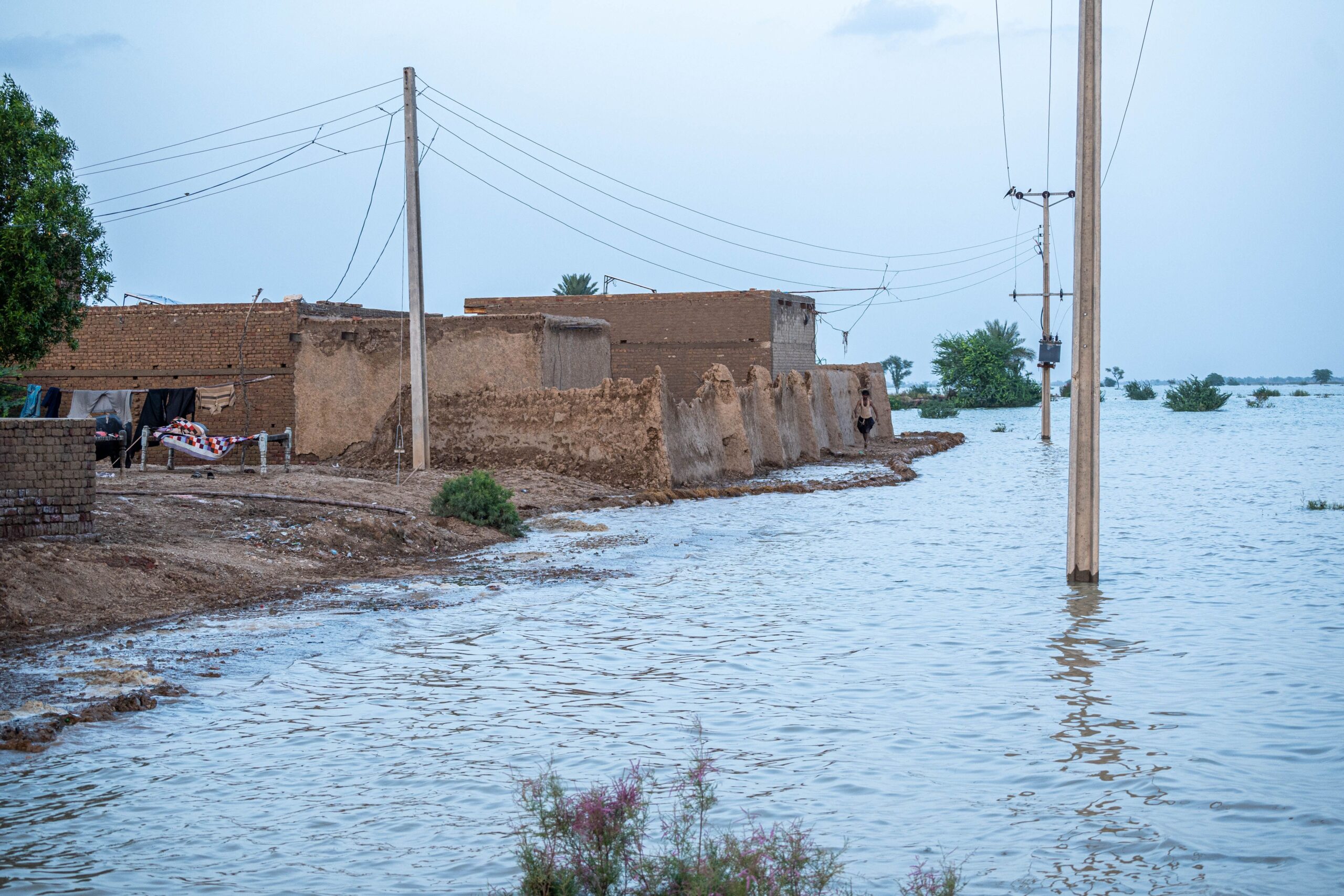
In 2010, floods swept across 20% of Pakistan’s land area, affected 20 million people, and killed more than 1,700. Twelve years later, in 2022, it happened again this time with a third of the country underwater, 33 million people affected, and $30-40 billion in combined losses and damage. In 2025, it happened a third time: over 1,000 dead, 6.9 million affected, 2.2 million hectares of cropland destroyed. So why does a country that has now lived through three catastrophic floods in fifteen years keep paying to rebuild the same vulnerable homes, on the same riverbanks, instead of investing to stop the water from reaching them at all?
Here’s what’s actually driving that cycle.
Humanitarian Response Is Struggling to Keep Pace With Recurring Disasters
Pakistan’s humanitarian response is under increasing pressure as floods and other disasters occur more frequently and affect larger populations. Although disaster preparedness, coordination, data systems, and institutional frameworks have improved since the 2010 floods, the 2022 floods exposed continuing challenges, including funding shortages, delayed assistance, uneven service coverage, and prolonged recovery needs. Following the 2022 floods, the United Nations initially appealed for $160 million in emergency assistance, but the scale of humanitarian needs required further support. Recurring disasters, stretched humanitarian budgets, and competing global crises make it increasingly difficult to sustain large-scale relief while also investing in long-term prevention. The challenge, then, is not only responding faster when floods occur, but investing consistently in measures that reduce the damage before they happen.
Prevention Policies Exist, but Local Implementation Remains Weak
Pakistan has developed disaster risk reduction (DRR) policies and institutions since the 2005 earthquake, focusing on prevention, preparedness, mitigation, and early warning systems. However, the experience of recurrent floods in Sialkot shows a significant gap between having policies and implementing them at the local level. Although early warning systems and DRR policies exist, communities often lack adequate awareness, training, safe evacuation plans, financial protection, and compliance with building codes. Weak institutional coordination, unclear responsibilities, limited resources, insufficient community involvement, and inadequate use of local knowledge further hinder effective implementation.
Pakistan’s National Disaster Management Authority (NDMA) was itself born out of a disaster created in 2010 in the middle of that year’s floods, after a 2005 earthquake had already exposed the gap. Down at the district level, where prevention work like drainage upkeep and dam inspection actually happens, the system remains hollow: many District Disaster Management Authorities (DDMAs) remain inactive or under-resourced until emergencies strike, operating without sustainable budgets or trained personnel.In practice, the system often remains more responsive to emergencies than focused on sustained prevention.
Deforestation and Land Use Change Have Increased Flood Vulnerability
Deforestation and changes in land use have increased Pakistan’s vulnerability to floods by reducing the ability of forests and soil to absorb and control rainfall. The decline in forest cover has contributed to greater water runoff, soil erosion, and flood risks. Experts have pointed to measures such as reforestation, watershed management and restrictions on construction in flood-prone areas as ways to reduce vulnerability . Stronger action against illegal logging and greater community participation are also needed to reduce flood vulnerability. Analysts estimate that Pakistan’s tree cover has decreased by at least 80% since independence in 1947, further reducing natural protection against floods.
Climate Finance Is Falling Short of What Pakistan Needs
Pakistan’s climate finance challenge is not only about mobilizing more money, but also about how effectively available resources are prioritised and converted into practical projects. The World Bank estimates that Pakistan will need around $348 billion between 2023 and 2030 to address its climate and development challenges, including $152 billion for adaptation and resilience, far more than the country’s current fiscal space can support. Pakistan has made progress through climate budget tagging and by integrating climate considerations into the budgeting process, but significant gaps remain in prioritization, implementation and coordination. At the same time, Pakistan struggles to access and absorb international climate finance because of limited institutional capacity, complex funding requirements, weak coordination, and a shortage of technically sound, “investable” projects. Finance Minister Muhammad Aurangzeb acknowledged in August that Pakistan had failed to develop enough such projects to absorb pledged flood-related financing. The challenge is to turn available climate finance into projects that reduce flood risks before the next disaster, rather than financing recovery after the damage is done
Conclusion
Pakistan’s flood problem is not a lack of knowledge about what needs to be done. The country has disaster-risk policies, early-warning systems, environmental solutions and access to climate-finance opportunities. The deeper challenge is turning these tools and resources into effective prevention. Weak local implementation, environmental degradation and limited financing continue to leave communities exposed. Until these gaps are addressed, Pakistan will remain caught in a cycle of responding to disasters and rebuilding after losses, rather than investing in measures that reduce risks before disasters strike.
About the Author:
Ayesha Saleem is Program Associate at Accountability Lab Pakistan and can be reached at ayesha@accountabilitylab.org