
NEWS
IN BRIEF

Pakistan’s farmers face a market where rising production costs meet uncertain prices, limited information and weak bargaining power. Decisions made months before harvest can leave small growers exposed to surpluses, disrupted exports and prices far below expectations. Government support mechanisms exist, but announced prices and agricultural finance do not always translate into meaningful security at the farmgate. A more accountable agricultural market requires timely information, transparent procurement, better storage, stronger farmer organisations and protection against climate-related losses. For farmers, resilience begins with having enough information, choice and security to make the next crop possible.
SHARE
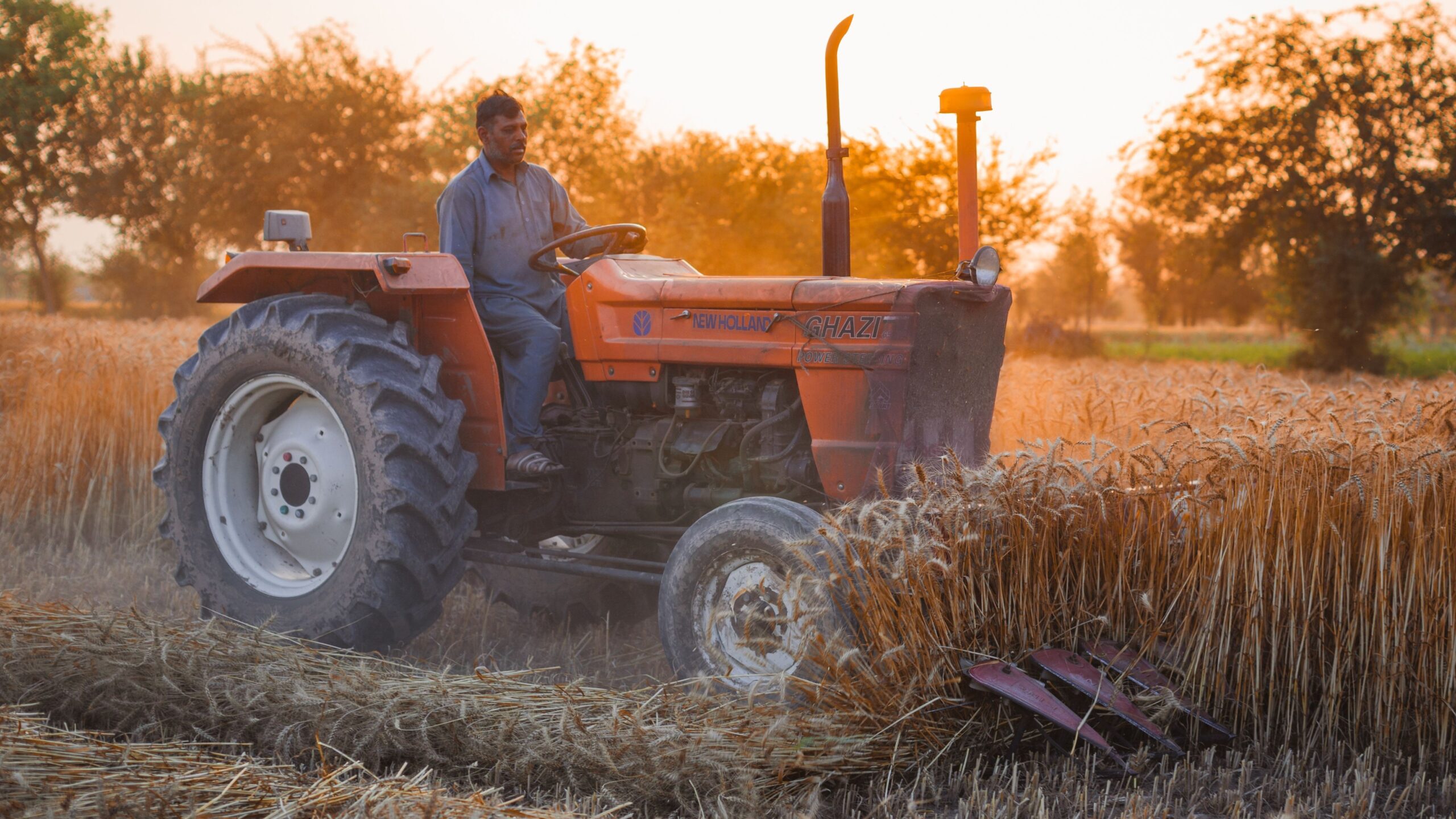
Shakil is a small farmer from Sahiwal, one of Punjab’s fertile agricultural districts. Farming is not simply his occupation; it supports his family, services his debts and finances the next crop. Like many small growers, he also leases additional land, taking on more risk in the hope that a good harvest will leave enough to live on and plant again.
During the 2023–24 Rabi season, he divided his land between wheat and potatoes. When the wheat harvest arrived in 2024, however, the price he actually found in the market was far below the support price announced by the Punjab government. The province had fixed the wheat support price at Rs. 3,900 per 40 kilograms, but reports from Sahiwal and other districts put market offers around Rs. 3,000–3,100.
For a farmer carrying debt for seed, fertilizer, diesel, pesticides or land rent, a weak harvest-time price is not just a disappointing sale. It can determine whether the next crop is planted on time, whether another loan is taken and whether household expenses can be met. The agricultural cycle therefore does not end at harvest; the price received today shapes tomorrow’s production.
When yesterday’s price determines tomorrow’s crop
Farmers make planting decisions months before they know what the market will look like. If wheat, potato or maize prices were attractive in the previous season, more farmers may respond by increasing acreage. Each decision can be rational, the collective result can be very different. When thousands of growers respond to the same price signal, supply can rise faster than demand, producing a surplus and a price collapse.
The potato crisis of the 2025–26 season illustrates this problem. Pakistan’s potato area had reached about 953,000 acres in 2024–25, producing around 9.4 million tonnes. Punjab, which produces roughly 95% of the country’s potatoes, expanded its area by about 24% for the following season, while production was expected to approach 12 million tonnes. At the same time, the closure of the Afghanistan border disrupted an important export outlet. The combination of rising production and weaker external demand intensified the surplus.
The lesson is not that farmers simply produced ‘too many potatoes.’ They responded to earlier returns, input conditions and expectations about demand. The problem is that market conditions changed after the planting decision had already been made.
A farmer needs a forecast, not just yesterday’s price
A farmer deciding what to plant needs more than the last mandi price; he needs to know how much land is likely to be planted, expected production, domestic consumption, export demand, trade restrictions, storage capacity and weather risks. Without such information, a farmer is making a large investment decision with incomplete knowledge.
Punjab already has much of the institutional machinery needed for better market intelligence. Its Crop Reporting Service collects acreage, yield and production estimates and conducts grower-opinion, harvest-price and cost-of-production surveys. The service says its information is used for agricultural planning, food security, price policy and import-export decisions.
Imagine that official estimates show potato acreage is likely to rise sharply. Farmers should know before committing money to seed, fertiliser and land. If an export market is threatened by a border closure or trade restriction, they should know early. If expected production is likely to exceed domestic demand and available storage, that warning should reach villages before the crop goes into the ground.
The challenge is to turn this information into something farmers can understand and use before planting. They need this service to be translated into local languages and delivered to their doorsteps in written or multimedia formats.
An announced price is not always an available price
The 2024 wheat episode showed the other side of the problem. Punjab announced a support price of Rs. 3,900 per 40 kilograms, but farmers were reported selling below that level because government procurement was limited or delayed. The Auditor General of Pakistan’s Special Study on the Wheat Procurement/Import Crisis 2023–24 later examined procurement, imports, stocks and policy decisions, highlighting the importance of coordination between production forecasts, government stocks and market intervention.
A support price has practical meaning only when farmers have a realistic mechanism to sell at or near that price. Otherwise, the difference between an announced price and the price actually available at the farmgate becomes another form of policy uncertainty.
The farmer’s weakest moment is often the moment of sale
Consider a truckload of potatoes arriving at a mandi. The farmer has already paid for production and transport, while the crop cannot remain exposed indefinitely. Storage may be unavailable or unaffordable, and a loan repayment or the cost of the next crop may already be due. The farmer needs cash, and the buyer knows it.
Traders, commission agents, wholesalers and retailers are not unnecessary actors. They arrange transport, storage, sorting, finance, market access and distribution. The question is whether the market gives farmers enough bargaining power and price information within that chain.
Research on Pakistan’s fresh-produce markets found substantial price wedges between the farmgate, wholesale auction and retail stages. An International Growth Centre study of potatoes, onions and tomatoes notes that previous research found farmers receiving only about 57% of the auction price; the study also identifies margins for wholesalers, bulk-breakers and retailers while recognising that transport, storage, wastage and other costs contribute to the differences.
This does not mean every difference between the farmer’s price and the consumer’s price is an unfair profit. Someone pays for transport, someone bears storage costs and spoilage, someone provides finance, but the distribution of these costs and margins should be more transparent. A farmer should be able to understand how the price offered at the farmgate relates to the mandi price and, ultimately, the price paid by consumers.
Sugarcane shows why market structure matters
Sugarcane presents a different challenge because growers in many areas depend heavily on nearby mills. The number of realistic buyers can therefore be small, making bargaining power particularly important. In November 2025, the Competition Commission of Pakistan issued show-cause notices to ten Punjab sugar mills over alleged coordination on the start of crushing and a procurement price of Rs. 400 per 40 kilograms. The notices were allegations under investigation, not final findings.
The broader point is that agricultural competition cannot be judged only by looking at an officially notified price. The relevant questions include how many buyers are available, whether farmers can switch buyers, whether payments are timely and whether producers have alternatives.
Farmers are squeezed from both sides
At the beginning of the agricultural cycle are rising costs: seed, fertiliser, pesticides, diesel, electricity, irrigation, machinery, labour, land rent and credit, while at the end is an uncertain selling price.
When formal finance is difficult to obtain, growers may depend on informal borrowing or advances connected to buyers and intermediaries. Such arrangements can provide essential liquidity, but they may also reduce freedom over when and where produce is sold. The cycle can become self-reinforcing: low prices create debt; debt creates pressure to sell quickly; quick sales weaken bargaining power; weak bargaining power lowers returns; and lower returns increase dependence on borrowing for the next crop.
Climate risk is market risk
Farm economics can no longer be separated from climate risk. Floods can destroy crops and roads, extreme heat can reduce yields, irregular rainfall can disrupt sowing, drought can increase irrigation costs, and changing weather can increase pest and disease risks.
The 2025 floods underline the scale of this exposure. Pakistan’s Economic Survey 2025–26 estimated total flood damages at Rs. 822 billion, including Rs. 430 billion in agriculture damages and Rs. 422.6 billion in crop losses; Punjab accounted for about 76.8% of overall losses.
A flood can destroy a crop, damage storage, interrupt transport, delay the next planting season and disrupt exports. The farmer may be left with debt but no harvest. This is why weather information, resilient seeds, better irrigation management, storage, crop diversification, insurance and emergency finance should be treated as parts of agricultural market policy rather than separate environmental concerns.
Punjab’s 2025–26 agriculture programme includes a Fasal Bima Scheme intended to reduce farmers’ financial exposure to losses from natural calamities, pests and climate-related events. The practical test, however, is whether vulnerable farmers can access such protection and receive compensation quickly enough to recover and plant again.
What would an accountable agricultural market look like?
The following recommendations can help farmers, growers, policymakers, and other stakeholders make better informed decisions and plan agricultural activities more effectively:
- Market information should be public, timely and understandable. Farmers should be able to see farmgate, mandi, wholesale and retail prices, together with acreage trends, production estimates, export volumes and major trade-policy changes.
- Planting information should arrive before planting. A farmer should know if potato acreage is expanding rapidly, if wheat stocks are unusually high, if an export market is at risk or if expected production is likely to exceed domestic demand.
- Major procurement, import and export decisions should be predictable. A farmer cannot change a crop after it has been harvested. Policy uncertainty therefore becomes another form of economic risk.
- Procurement should be transparent, where government agencies buy crops, the public should be able to see how much was purchased, from which districts, at what price and from how many farmers. This would help determine whether procurement is reaching small growers.
- Storage and warehouse-receipt systems should be expanded. Storage gives farmers time; time can create bargaining power. Warehouse receipts can also allow stored produce to support financing, reducing the pressure to sell immediately.
- Farmer organisations and producer groups should be strengthened so small growers can aggregate produce, negotiate transport, access storage and approach processors or exporters collectively.
- Agricultural policy should treat climate resilience as part of farm economics. Insurance, weather information, resilient infrastructure, flood protection, emergency credit and rapid compensation should work together so that one failed crop does not automatically destroy a farmer’s ability to finance the next one.
Conclusion
Punjab’s agricultural challenge is not simply that farmers sometimes receive low prices. It is that many enter the market carrying substantial uncertainty while possessing limited information, storage and bargaining power. A potato farmer may expand acreage because prices were attractive the previous year, only to discover that thousands of other farmers made the same calculation. A closed export route can turn the same decision into a surplus. A wheat farmer may hear an official support price but still struggle to find a buyer at that price. A sugarcane grower may depend on a small number of mills. A maize farmer may watch the market price fall while input costs remain unchanged.
These are connected problems. They concern how agricultural markets distribute information, bargaining power and risk. The policy debate therefore needs to move beyond the narrow question of what the government should pay for a crop. A more useful question is whether farmers have the information to make a production decision, the choice to find a buyer, the bargaining power to negotiate and the protection to survive a bad season.
A fairer agricultural system begins by making the chain visible—from the seed planted in the field and the cost of production, to the farmgate price, trader, processor, exporter and final consumer price. Only then can we ask who is carrying the risk and who has the power to manage it.
For Shakil, the answer cannot simply be another harvest, it has to be a market in which a good harvest has a reasonable chance of becoming a good livelihood.
About the Author:
Abdul Aleem is Program Officer at Accountability Lab Pakistan and can be reached at aleem@accountabilitylab.org