
NEWS
IN BRIEF

What does it take for funding to translate into lasting change at the community level? Drawing on monitoring visits across Bangladesh, Nepal and Sri Lanka, this blog explores how grassroots organisations use local knowledge, community relationships and modest grants to strengthen citizen engagement and public accountability. It examines how disproportionate compliance requirements, short funding cycles and narrow definitions of organisational capacity can create barriers for smaller organisations. The experience highlights the importance of flexible funding, practical support and accountability systems tailored to local contexts. Ultimately, effective grantmaking requires recognising the value grassroots organisations already bring and creating funding systems that help them sustain and expand their impact.
SHARE
What happens between a grant being approved and the intended change reaching communities? My recent monitoring visits and conversations with grassroots organisations across Bangladesh, Nepal and Sri Lanka offered a different perspective on this question. Sitting with diverse grassroot actors, learning about their work, the realities they navigate and the choices they make along the way brought into view much more than individual project outputs and progress. The conversations revealed how funding and technical assistance can enable local action, where processes can create unintended barriers, and how much can be achieved when relatively small amounts of support are built around existing community relationships and local knowledge. These interactions also prompted me to think more closely about what a more inclusive and responsive funding ecosystem should look like from the perspective of those working closest to communities. In this blog, I am sharing some of these first-hand observations and what they suggest about how we might think differently about funding grassroots work.
Over the past few weeks, I travelled across Bangladesh, Nepal and Sri Lanka as part of the Digital Democracy Initiative (DDI) South Asia’s monitoring and impact assessment visits. I met organisations at very different stages of their work. Some had completed their grants several months earlier; others were just coming to the end of their implementation period, while some were still struggling due to evolving regulatory frameworks and bureaucracies in the respective contexts.
I went into the visits with fairly standard M&E questions. What had been delivered? What had changed? What had worked? What had not? What was likely to continue after the grant? Those questions remained important. But after spending time with the organisations and, more importantly, listening to how they had actually worked with communities, institutions and volunteers, I found myself thinking about a different set of questions.
What does our funding system make easier for these grassroots collaborators? What does it make harder? And how much of what we call organisational capacity, is actually a measure of an organisation’s ability to navigate the funding system rather than its ability to work effectively with communities? I came back from the field with a stronger appreciation of why grassroots organisations matter, but also with a clearer sense that the funding ecosystem still has some way to go in making space for them.
What becomes visible when you meet organisations in their own context
One of the first things that struck me was the difference between what can be understood from a proposal, sitting on other side of the table, and what becomes visible when you sit with the people implementing it. Some of the organisations I met have relatively small teams and limited administrative infrastructure. The same people may be responsible for programme implementation, community engagement, finances, reporting, communications and dealing with government officials.
Yet they often have something that cannot easily be captured in an organisational capacity assessment – longstanding relationships with the communities they serve. That was particularly evident in Bangladesh.
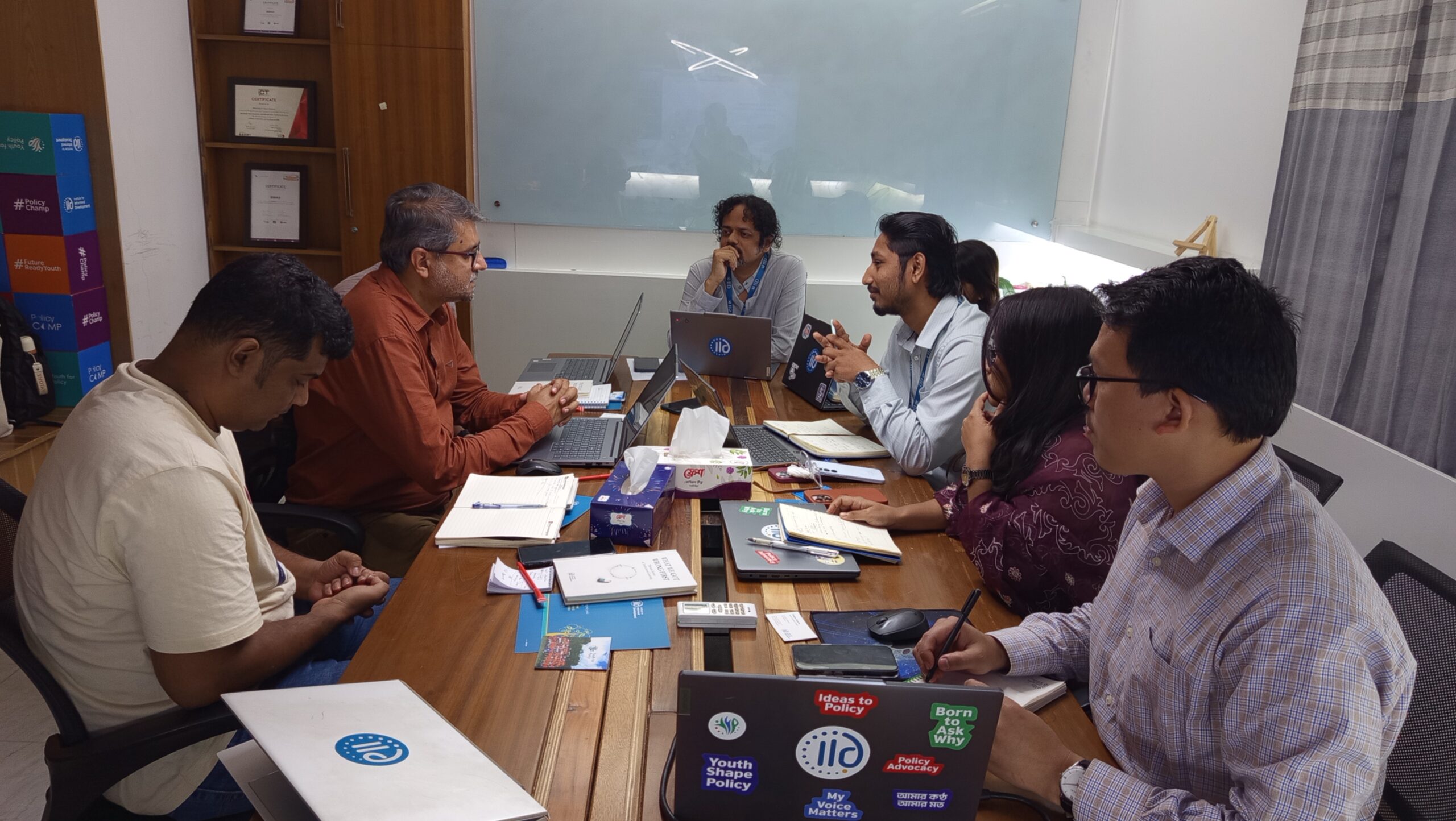
Bangladesh Rrual Economic Development’s CLUE project, for example, was designed around a relatively straightforward mechanism through which community volunteers could identify problems with public services and bring them to the attention of local government. When I visited, the project had already ended, but the mechanism had not simply disappeared with the grant. The platform had been handed over to the local government, a social welfare officer had the responsibility for managing the portal, and volunteers continued to support the process. There were clear limitations. Complaints still had to be collected manually and entered by the volunteers, and BRED was uncertain about how to expand the volunteer base across other districts. But there was also something significant in what had happened, an intervention that had started as a small grant had become part of an existing local governance structure, owned and managed by the local government. The technology was useful but organization’s relationship with communities and local government made it possible.
Similarly, SERAC Bangladesh offered one of the clearest examples of what meaningful public and government engagement can look like at the grassroots. What struck me was not simply the number of people reached or activities conducted, but the way the organisation had created a pathway between community concerns and public institutions. Through its engagement with communities, SERAC was able to bring issues and perspectives that are often difficult to reach through conventional consultation processes into conversations with relevant government actors. These interactions created a space where community’s experiences could inform the discussion and where institutional actors could respond to issues emerging from the ground.
For me, this was an important reminder that the value of a small grant is not always captured by the immediate outputs written into a proposal. Sometimes its real value lies in helping an organisation create or strengthen a relationship between citizens and institutions, a relationship that can continue beyond the life of the grant.
Adaptation is often part of good implementation
Another recurring observation was that the reality of implementation rarely follows the proposal exactly.
This is not necessarily a problem. Asia Lanka Social Development Cooperation (ALSDC) offered another useful lesson in the value of adapting ambition to implementation reality. The initial thinking was to implement the project across 23 districts, which looked attractive in terms of geographic reach. But as the organisation considered what could realistically be sustained, it became clear that spreading the intervention so widely would risk producing activity across many locations without the depth needed to maintain the work in the long term. The more realistic approach was to concentrate on three or four districts where ALSDC already had a strong footprint, relationships and understanding of local communities.
That was not a reduction in ambition; it was a more realistic definition of what success could look like. A small grant does not necessarily create greater impact by covering more ground. In some cases, concentrating resources where an organisation already has trust and relationships may provide a stronger foundation for meaningful engagement and continuation beyond the grant period.
A similar example came through from Sri Lanka, although in a very different context. Right to Life is using DDI support to begin digitising a human-rights response mechanism that it has developed over many years through its network of Human Rights First Aid Coordinators. The platform was still under development when I visited. However, it was clear that the organisation did not see technology as a replacement for its existing human network. Instead, the digital mechanism was intended to extend the network’s reach and make the response system more accessible, while the human relationships would remain central to how cases were assessed and supported. Again, the most important asset was not necessarily the new technology. It was the infrastructure of trust that existed before the grant.
Some of the most useful changes were relatively modest
These grassroot interactions also added to the perspective on how we define innovation. In development programmes, we often look for something visibly new; a new platform, a new tool, a new methodology or a new model. Some of the changes I found most encouraging were much less dramatic:
- A local government officer continuing to use a digital mechanism introduced through a small grant.
- Young people continuing to submit concerns on the newly developed platform after a formal project activity had ended.
- Volunteers continuing to participate because they had developed a sense of ownership over a process.
- An organisation taking an existing offline support system and beginning to make it accessible digitally.
These are not necessarily dramatic project achievements. But they may tell us more about the prospects for sustainability than the number of workshops conducted or materials produced.
For the Light in Bangladesh provides another useful example. Its TRACE platform was designed to enable young people to raise local concerns and create an accountability pathway. During my discussion with the organization and its beneficiary youth, I learned that the platform was still being used after the grant had ended and that a substantial proportion of the youth ambassadors remained engaged. At the same time, the institutional side was less developed. There was a district-level task force, ensuring that the public grievances are being resolved regularly, but no formal government collaboration with the platform. Both parts of that story matter.
The continued engagement of our local collaborator with city corporation is encouraging. For a relatively new organisation and a recently launched citizen engagement platform, building visibility, trust and credibility with public institutions will naturally take time. The fact that the platform is already being used and that young people remain engaged provides a strong foundation for that process. The current, less formal engagement with government may well evolve as the organisation demonstrates the platform’s value and builds a stronger track record. In this case, the foundations for deeper institutional engagement appear to be there; the next step is to give that relationship the time and space to mature.
The administrative reality of small grants
The most difficult part of these reflections concerns compliance. I do not think compliance is inherently problematic. Funders have a responsibility to safeguard resources, ensure financial accountability and manage risk. Those responsibilities should not disappear simply because the recipient is a grassroots organisation. The question is whether the requirements are proportionate to the grant and appropriate to the organisation’s context.
Across the DDI South Asia portfolio, smaller organisations often needed considerable support to navigate procurement, financial documentation, milestone reporting, branding requirements, M&E templates and other grant-management processes. Some of that support was genuinely valuable. Over time, organisations became more familiar with systems that can help them manage their work more systematically and, importantly, position themselves to access future funding.
At the same time, I heard in different ways how much time and attention these requirements could demand, particularly for organisations with small teams that were already balancing implementation, community engagement and day-to-day organisational responsibilities. This is where an important tension emerges. The same systems that are intended to strengthen accountability can, if not carefully calibrated, begin to draw significant time and energy away from the work the funding is ultimately meant to support.
The issue, therefore, is not whether documentation, financial controls or monitoring are necessary. They are. The more important question is whether we have designed these systems in a way that is proportionate to the size of the grant, the capacity of the organisation and the level of risk involved. For grassroots organisations in particular, accountability should help us understand whether resources are being used responsibly and whether meaningful change is taking place. It should not become so demanding that the people closest to communities spend a disproportionate amount of their time understanding the compliance and documenting the work for the funding system rather than doing the work itself.
The challenge is to ensure that accountability requirements remain proportionate to the size and nature of the grant, while giving grassroots organisations the support and resources to strengthen their systems over time. Small grants can provide an important entry point, but where organisations demonstrate promising results and the potential to sustain or expand their work, there should also be pathways to larger, longer-term funding. This would allow organisations to build the institutional capacity needed to manage resources responsibly, meet donor requirements and deepen the impact of their work.
Capacity is not the same as administrative sophistication
One concern I have come away with is what the funding ecosystem often considers to be organisational capacity. An organisation that can produce polished proposals, maintain sophisticated financial systems and respond quickly to donor templates is easier to fund. But that does not necessarily mean it has deeper relationships with communities. Conversely, an organisation may have limited administrative capacity while having years of experience working with a particular group, understanding local dynamics and being trusted by people who rarely interact with formal institutions.
The regional research undertaken by Accountability Lab through DDI South Asia had already pointed towards this variation. The training needs assessment described many organisations as “functionally capable but institutionally uneven”; able to deliver programmes and manage grants, but with varying levels of formal systems and tools. The field visits gave that finding a human dimension. It made me question whether we sometimes confuse being good at receiving grants with being good at doing community work. They are related capabilities, and though not mutually exclusive, they are not the same thing.
Songjong Foundation in Bangladesh offers one of the clearest examples of a grassroot organization creating a pathway from community participation to institutional engagement. Young people with disabilities were trained by Songjong Foundation and then engaged in accessibility audits of government digital services, helping translate their own experiences of exclusion into practical recommendations. The findings were shared with public sector stakeholders, and 11 government departments intended to consider the recommendations in their upcoming budgets and implementation plans. There were also early signs of institutional uptake: an accessibility improvement to the e-passport website’s CAPTCHA was reported and addressed through voice command integration. Songjong is now part of the social welfare department’s consultative committee. The project also began establishing a youth accessibility taskforce, including eight women, to continue follow-up and advocacy beyond the grant period to work closely with social welfare department.
The value of building on what already exists
Another lesson I would carry forward from DDI South Asia is the importance of understanding what already exists before designing the intervention. Several organisations were not building entirely new mechanisms.
BRED in Bangladesh, for example, was working through existing community volunteers and local government relationships. Right to Life in Bangladesh already had a network of human-rights responders. Sisterhood Initiative in Sri Lanka had an existing support mechanism and hotline before developing its chatbot.
Similarly, Sahana Social Development Alliance (SSDA) in Sri Lanka used DDI support to make public services more accessible to people with visual and hearing impairments. It developed an accessibility portal and instructional videos explaining processes such as obtaining a national identity card, opening a bank account, applying for disability allowances and registering to vote. Within its first week, the portal recorded 198 visits and feedback collected around the accessibility challenges. SSDA also engaged government officials on barriers identified through community consultations, securing a letter of support and a commitment from the district social service officer to initiate accessibility audits of government websites.
The experience highlights that digital inclusion goes beyond developing and launching a tool. Its value ultimately depends on whether people can use it to access services more independently. User feedback had already identified the need for a voice-command feature, reinforcing the importance of listening and adapting. The next step is to establish whether the portal helps users navigate services with less reliance on others, while sustaining engagement with government institutions.
These existing relationships were not always visible in the formal project outputs, but they were critical to the potential for the projects to continue. A small grant can therefore have a very different value when it is used to strengthen an existing local mechanism rather than requiring an organisation to create an entirely new structure for the duration of the grant. That is something I think funders should pay more attention to, while focusing on innovation. The starting point should not always be, what new project can this grant create? Sometimes, the better question is, what is already working locally, and what small investment could make it work better?
Flexibility does not mean less accountability.
I would not take these observations as an argument for removing compliance requirements or lowering standards. That would miss the point. The more useful lesson is about proportionality and design. A small community grant should still have clear financial controls and accountability. But it may not need the same administrative architecture as a large institutional grant.
There may be circumstances where milestone-based or fixed-amount funding is more appropriate. There may be cases where fiscal sponsorship can allow a legitimate but informal community initiative to participate in a funding opportunity. There may be situations where fewer, more focused reporting requirements would provide sufficient assurance while leaving more time for implementation.
DDI’s experience has already begun to explore some of these possibilities, including simplified approaches for smaller grants, milestone-based financing, and fiscal sponsorship where registration requirements create barriers for local actors. The important point is that flexibility should be designed, not improvised.
Some broader lessons from the DDI experience
Across the three countries, I came away with two broad sets of learning.
Where the funding ecosystem still creates difficulties
- First, funding size matters. The administrative requirements attached to a grant process can become significant relative to the size of the funding and the organisational capacity of the recipient.
- Second, time-flexibility matters. A short grant can support a useful pilot, but building trust with communities, developing institutional relationships and demonstrating meaningful behavioural or institutional change often takes longer.
- Third, we need to be careful about what we measure. It is much easier to count training participants, meetings, platforms and publications than to understand whether someone became more confident, whether a public institution changed its practice, or whether a community mechanism continued after funding ended.
- Fourth, we sometimes assume that an organisation that looks more formally structured is automatically more capable. Registration status, financial systems and proposal-writing ability are useful signals, but they do not tell the whole story about community legitimacy or effectiveness.
- And finally, there is a structural access issue. Some of the actors closest to communities do not fit neatly into the formal structures through which international funding is normally channelled. If we do not find ways to accommodate legitimate informal or emerging actors, we risk narrowing the pool of organisations that can participate in the funding ecosystem.
What worked well
- Relatively modest amounts of funding gave local organisations the space to test ideas and respond to needs that may not fit easily within larger, less flexible programme structures.
- Practical support mattered, particularly for organisations with strong programme and community capacity but less experience around navigating structured funding systems. Guidance on M&E, financial processes, communication and reporting helped organisations become more comfortable with systems that can serve them beyond a single grant. Dalit Lives Matter Global Alliance in Nepal offers a good example. Through its Next-Gen Democracy project, young people from marginalised communities turned their experiences of caste-based discrimination and online harassment into stories for wider advocacy. One participant published an article, while others developed video stories and engaged with a Dalit member of parliament. The experience highlighted that meaningful accompaniment also means providing the mentoring, psychosocial support and attention to privacy needed for young people to share their experiences safely and develop their confidence to engage in advocacy.
- Where organisations could explain how circumstances had changed and why they needed to adjust their approach, there was scope to keep implementation relevant rather than follow the original proposal simply for the sake of consistency.
- Reaching organisations working with communities often overlooked by mainstream policy and funding spaces is central to making the ecosystem more inclusive. This approach naturally requires additional time and engagement from the project team, particularly when working with a diverse range of grassroots organisations. However, that investment can be worthwhile when it helps organisations strengthen their work, build confidence and develop relationships that continue beyond the life of a grant.
The broader lesson from these grassroot interactions goes beyond DDI South Asia itself. We often talk about inclusion in terms of who participates in our programmes. But there is another question that deserves equal attention: who actually gets the opportunity to receive funding and become part of the programmes in the first place?
If an organisation needs sophisticated administrative systems, extensive prior grant experience and considerable proposal-writing capacity before it can access relatively small amounts of funding, we may unintentionally exclude some of the organisations closest to the communities we want to reach. The answer is not to lower standards. It is to make them proportionate to the size of the grant, the capacity of the organisation and the level of risk involved. That could mean simpler and more proportionate due diligence, smaller and more flexible grants, milestone-based financing where appropriate, fiscal sponsorship for legitimate informal actors, longer implementation periods for relationship-based work, and practical accompaniment for organisations that are strong in community engagement but still developing their administrative systems.
It also means recognising that some of the most meaningful signs of change may not be immediately visible in a project completion report. A government department continuing to use a mechanism after the grant ends. A volunteer continuing to work with a community because they now see the process as their own. A young person returning to a platform after the formal activity is over. An organisation retaining a new capability. Or a relationship between a community organisation and a public institution continuing beyond the project. These may appear to be small signals, but they tell us something important about whether an intervention has found a place in the real world.
After several weeks of conversations with grassroot actors across the region during the recent visits, the question that stays with our team, is perhaps less about whether grassroots organisations can fit neatly into existing funding systems, and more about whether those systems can become flexible enough to recognise and support the value that grassroots organisations already bring.
About the Author:
Asif Farooqui is Director Programs at Accountability Lab Pakistan and can be reached at asif@accountabilitylab.org