
NEWS
IN BRIEF

Pakistan’s groundwater crisis is unfolding beneath the surface, with falling water tables, growing urban demand and unchecked extraction placing pressure on a resource essential to daily life and economic activity. Lahore, Islamabad and Rawalpindi offer clear evidence of how urban expansion and excessive pumping are altering the country’s underground water reserves. Addressing the crisis requires reliable data, locally informed regulation and a closer integration of groundwater management, agricultural practices and urban planning. The decisions made today will determine how much water remains accessible to communities and future generations.
SHARE
Water is often described as “blue gold”, and the familiar phrase “water is life” captures its importance. Yet because water has long been available to us at little direct cost, Pakistan has too often treated it as an unlimited gift. The consequences of that assumption are becoming increasingly difficult to ignore.
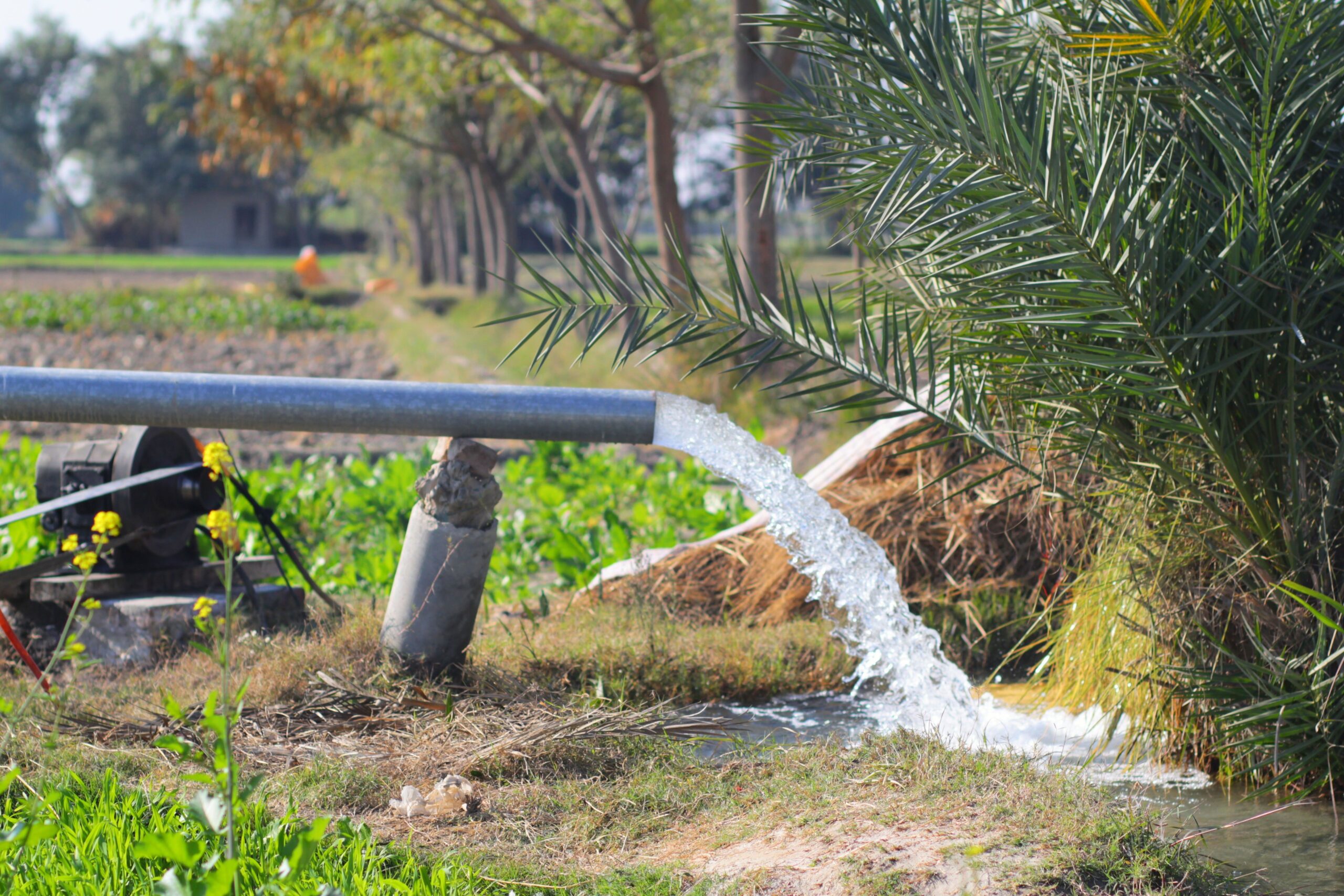
Pakistan’s groundwater crisis is largely invisible. It does not always look like a dry riverbed, an empty reservoir or a barren field. In many places, a pump still produces water, households still fill their tanks and farmers still irrigate their crops. But water coming out of a tube well is not proof that the aquifer beneath it is healthy. Across many parts of Pakistan, groundwater is being extracted faster than nature can replenish it.
Groundwater is stored in geological formations known as aquifers. Rainfall, river seepage, irrigation return flows and other natural processes replenish groundwater, but the rate of recharge varies greatly from place to place. When withdrawals exceed recharge for long periods, the water table falls. The first signs may be easy to miss: a shallow well becomes less productive, a farmer drills deeper, a city installs another borehole, or a household needs a more powerful pump. Over time, however, the cost of reaching water rises sharply.
The Pakistan Council of Research in Water Resources (PCRWR) says groundwater provides about 60 percent of irrigation water, 90 percent of drinking water and 100 percent of industrial water, according to figures presented on its Lahore groundwater page. The World Bank likewise describes groundwater as central to Pakistan’s domestic water supply and agriculture, while warning about over-abstraction, contamination and weak monitoring.
Pakistan’s agricultural economy depends heavily on irrigation. Canals remain the backbone of the system, but groundwater gives farmers flexibility when canal water is unavailable, insufficient or poorly timed. An earlier PCRWR assessment reported about 1.2 million tube wells extracting approximately 50 million acre-feet of groundwater annually for farm irrigation. That figure is an assessment-era estimate, not a current nationwide count.
It would be neither realistic nor fair simply to tell farmers to stop pumping. For millions of farmers, groundwater is an essential production input and an insurance policy against unreliable surface-water supplies. The real challenge is to produce more food with less water while ensuring that extraction does not permanently exceed recharge. Better irrigation efficiency, crop choices suited to local water availability, improved water management and farmer participation must therefore become central to groundwater policy.
Pakistan’s major cities provide some of the clearest evidence of groundwater stress. PCRWR reports that Lahore has about 1,800 public and private tube wells extracting approximately 3,500 acre-feet of water every day. According to the council, the city’s groundwater level is falling by an average of 3.03 feet, or about 0.92 metres, every year, based on WASA data.
Lahore covers approximately 1,014 square kilometres and receives average annual rainfall of around 630 millimetres. PCRWR estimates that rainfall generates about 0.52 million acre-feet of runoff, much of which is disposed of through drains rather than being used to recharge groundwater. Rapid urbanisation is simultaneously reducing the natural surfaces through which rain can infiltrate. The city is therefore caught in a dangerous imbalance: it pumps more water out while allowing less rainwater to get back in.
The problem is not confined to Lahore. A peer-reviewed study published in PLOS ONE found substantial groundwater decline in the Islamabad-Rawalpindi metropolitan area. Between 1999 and 2019, groundwater depth increased from 22.8 metres to 56 metres in Islamabad and from 37.8 metres to 59 metres in Rawalpindi. The study estimated average depletion rates of about 1.7 metres per year in Islamabad and 1.83 metres per year in Rawalpindi.
The study linked the decline to groundwater abstraction, population growth, tube-well density and the conversion of open land into built-up areas. The built environment increased from 7.77 percent to 36.51 percent between 1999 and 2019, while open land declined sharply. Concrete, asphalt and buildings reduce infiltration, making it harder for rainfall to reach aquifers. The result is a troubling paradox: a city can experience flooding during intense rainfall while its groundwater reserves continue to decline.
Pakistan’s groundwater problem is closely connected to the way cities manage rain. During intense monsoon rainfall, water runs rapidly across rooftops, roads and paved surfaces before entering storm drains and rivers. In Lahore, PCRWR has specifically noted that large quantities of rainwater are diverted into drains instead of being used for groundwater recharge.
This creates an important opportunity. Flood management and groundwater management do not always have to be treated as separate problems. Rainwater harvesting, scientifically designed recharge wells, permeable surfaces, restored wetlands and protected urban green spaces can help retain more water within cities. PCRWR reports that, in collaboration with CDA and FGEHA, it has established 110 groundwater recharge sites in Islamabad to enhance aquifer replenishment through rainwater harvesting and help mitigate urban flooding.
Recharge, however, must be scientifically planned. Contaminated stormwater should not simply be injected into an aquifer. The quality of recharge water, local geology and aquifer capacity must be assessed before recharge schemes are expanded.
Quantity is only one side of the problem. Groundwater can become increasingly difficult to use even before an aquifer is completely depleted. Untreated sewage, industrial wastewater, agricultural chemicals and poorly managed waste can seep into groundwater. The World Bank identifies contamination, salinity, wastewater and agricultural pollutants among the major threats to groundwater quality in the Indus Basin.
This means Pakistan cannot solve its groundwater problem simply by drilling deeper. A deeper well does not automatically mean safer water. Groundwater protection must address both the amount of water being withdrawn and the quality of the water that remains.
The easiest way to understand groundwater depletion is to think of an underground bank account. Rainfall and natural recharge are deposits. Pumping is withdrawal. If withdrawals remain greater than deposits, the balance falls. The World Bank describes over-exploitation of groundwater as a serious problem affecting about 18 percent of the irrigated area, as well as many urban areas. It also identifies inadequate data collection, weak regulation and contamination as major obstacles to sustainable management.
The question, therefore, is not whether Pakistan has groundwater. It does. The question is whether we are using it at a rate that aquifers can sustain.
Climate change adds another layer of uncertainty. It would be too simplistic to say that climate change merely means Pakistan will receive less rain. The bigger challenge is changing rainfall patterns, more intense rainfall events, drought, heat and changing water demand. Heavy rainfall does not automatically translate into groundwater recharge. When rain falls intensely over a short period, much of it may run away before it can infiltrate deeply. At the same time, higher temperatures can increase evaporation and crop water requirements.
Pakistan therefore needs to move beyond the assumption that a wet monsoon automatically restores groundwater. Rainfall must reach the aquifer, not simply the drainage system.
One of Pakistan’s major groundwater challenges is the lack of comprehensive, continuously updated information about extraction and recharge across all aquifers. There are, however, encouraging developments. PCRWR and the International Water Management Institute have developed a web-based Groundwater Management Information System containing information on groundwater quality and quantity, tube-well density, bore depths, water-table levels and other parameters.
Pakistan needs to know how much groundwater is available, how much is being extracted, how quickly water tables are changing and how much recharge is occurring. Without these answers, groundwater management becomes guesswork.
The answer is not to ban tube wells overnight or deprive farmers and households of water. Groundwater will remain indispensable to Pakistan. The objective should be to manage it as a shared natural resource rather than an unlimited inheritance.
First, groundwater extraction and water-table levels need systematic monitoring. Data should be collected regularly and made accessible to provincial and local authorities, researchers, farmers and communities. Second, Pakistan needs locally appropriate abstraction rules based on the capacity of individual aquifers rather than a one-size-fits-all approach. Third, agriculture must move toward more water-efficient practices and better coordination between surface water and groundwater. The World Bank recommends modern groundwater databases, conjunctive management of surface and groundwater, water budgeting, managed aquifer recharge and stronger protection of water quality.
Fourth, cities need to treat rainwater as a resource rather than simply a drainage problem. Rainwater harvesting should be incorporated into public buildings, housing schemes and other suitable developments, while recharge zones, wetlands, parks and open spaces should be protected. Fifth, recharge projects must be based on hydrogeological assessments and water-quality safeguards. Finally, pollution control must be treated as part of groundwater conservation, not as a separate environmental issue.
Groundwater depletion rarely arrives as one dramatic event. It happens quietly. A farmer drills another 100 feet. A city installs another tube well. A household replaces a pump. An aquifer drops another metre, and then another. Eventually the costs become visible: more electricity is needed to lift water, wells become deeper, poorer communities struggle to afford pumping, agricultural productivity becomes more vulnerable and water quality becomes harder to protect.
That is why groundwater depletion should not be viewed simply as an environmental issue. It is an economic issue, an agricultural issue, a public-health issue, a food-security issue and a climate-resilience issue.
Pakistan still has time to change course. The country possesses substantial groundwater resources, and groundwater will remain central to its economy and daily life. But substantial does not mean unlimited.
The national question should no longer be, “How much water can we pump?” It should be, “How much can we safely pump while leaving enough for the aquifer, the ecosystem and future generations?” That shift would transform groundwater from an invisible resource that can be freely extracted into a natural asset that must be measured, protected and replenished.
The pump may still be running today. But the real measure of water security is not whether water comes out of the tap. It is whether the aquifer beneath our feet is still capable of providing water tomorrow. Pakistan cannot continue treating groundwater as an endless inheritance. We are spending an underground savings account that took nature decades, centuries and, in some cases, much longer to build. The longer we delay restoring the balance between extraction and recharge, the more expensive the reckoning will become.
About the Author:
Abdul Aleem is Program Officer at Accountability Lab Pakistan and can be reached at aleem@accountabilitylab.org