
NEWS
IN BRIEF

Pakistan’s waste crisis extends far beyond uncollected garbage, affecting public health, the environment, waste workers, and urban governance. With waste generation rising and systems struggling with segregation, recycling, and safe disposal, the burden often falls on communities and workers most exposed to its consequences. Addressing the crisis requires moving beyond a “collect and dump” approach towards stronger waste systems, safer working conditions, responsible consumption, and accountable local governance.
SHARE
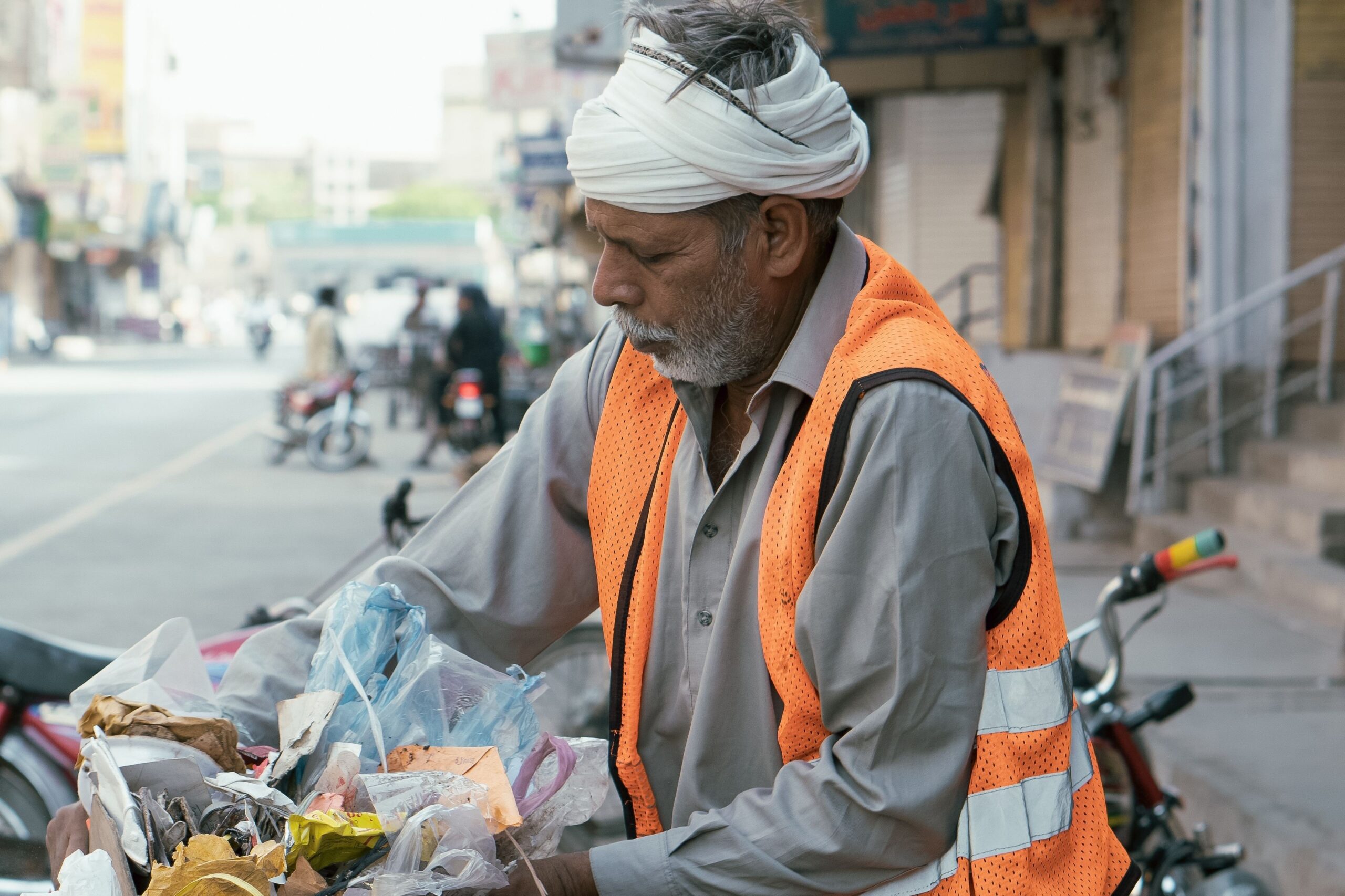
On the edges of Peshawar, the odor of rotten food and decaying plastic is present even before the landfill is visible. For Sajid, though, this is a job environment. For nearly 25 years, he has rummaged through waste to find plastic bottles, glass, and packaging that can be sold for recycling. UNDP Pakistan states that he can make approximately PKR 1,200–1,500 on a successful day. His experience reveals a reality frequently obscured from public awareness: once waste exits our homes, it does not vanish. It enters collection sites, waste disposal areas, drainage systems, water bodies, or, when incinerated, the atmosphere we inhale.
Consequently, Pakistan’s waste crisis extends beyond merely having messy streets. It poses a challenge in terms of public health, environment, labor, and governance. The main issue is not only the volume of waste produced, but also what occurs to it later and who faces the repercussions when systems break down.
Comprehending the Waste Issue
Waste originates from homes, marketplaces, industries, hospitals, construction sites, and more frequently from electronic goods and plastic packaging. Every stream necessitates suitable gathering, processing, recycling, or disposal. Urban solid waste continues to be the most apparent aspect of the issue. An assessment by the World Bank estimated that approximately 44 percent of Pakistan’s municipal solid waste consists of biodegradable materials, whereas plastics constitute roughly 10 percent. This composition is significant: organic waste presents chances for composting and recovery, whereas plastics and hazardous materials need distinct collection and processing.
The magnitude of waste has increased in parallel with population expansion, urban development, and evolving consumption patterns. Historical estimates from the World Bank indicate that municipal solid waste production was approximately 20 million tons in 2005 and close to 30 million tons in 2016, with forecasts suggesting about 42 million tonnes by 2030 and over 66 million tonnes by 2050 if current trends persist. These represent historical estimates and forecasts instead of present numbers, yet they illustrate the pressure on systems that are already under strain.
Successful waste management involves more than just gathering. It relies on source separation, dependable collection and transportation, recycling, composting, hazardous waste management, safe disposal, oversight, and enforcement. In areas where these systems are inadequate, recyclable materials are discarded, hazardous waste gets combined with regular trash, and waste is either dumped in unmanaged sites or incinerated. Consequently, Pakistan must shift from a ‘collect and dump’ approach to prevention, segregation, recovery, treatment, and safe disposal.
When Waste Turns into a Public Health Crisis
Improperly handled waste can jeopardize health even before its environmental effects are apparent. The WHO considers unregulated solid waste a major health issue since individuals can be exposed via contaminated food and water, polluted air, direct waste contact, and disease-spreading insects and rodents. These risks become especially grave when access to safe water, sanitation, and reliable waste services is already constrained.
One significant route is water contamination. Refuse decomposition generates waste and liquids that can pollute soil and groundwater, and rainfall can transport contaminants into surface water. Waste buildup near markets, residences, and water sources can elevate exposure levels and foster conditions that encourage infectious diseases.
Open burning is a frequent alternative when collection and disposal methods are insufficient. Burning can decrease visible piles, but it doesn’t solve the issue; it shifts part of it into the atmosphere. The WHO views open burning as dangerous, especially when it includes mixed waste and plastics, as it can expose nearby communities and workers to toxic pollutants.
Waste workers encounter some of the most immediate hazards. Sanitation employees and unofficial waste collectors might collect contaminated materials, chemicals, batteries and medical waste, often without adequate protective equipment. Healthcare waste adds another layer of risk
Medical waste introduces an additional layer of danger. The WHO estimates that approximately 15 percent of medical waste is dangerous, comprising infectious, toxic, chemical, or radioactive substances. Without adequate separation and handling, these materials can pose risks to healthcare personnel, waste management workers, patients, and nearby communities.
From Highways to Waterways: The Ecological Price
Trash seldom remains in the spot it is thrown away. Rain can transport plastic into drainage systems and water bodies, while litter close to rivers can infiltrate aquatic environments. At unmanaged waste sites, leachate may pollute nearby soil and groundwater; open burning emits pollutants into the air. The Asian Development Bank has emphasized the dangers of unregulated waste entering drainage systems and rivers, impacting aquatic ecosystems and groundwater.
Plastic vividly highlights the issue. Its affordability, resilience, and practicality have led to its widespread use, but these same traits enable discarded plastic to be carried by wind and water and remain in the environment. Bigger objects can break down into microplastics that infiltrate aquatic ecosystems and food webs. Recycling is valuable, yet it cannot address the issue by itself. Minimizing excessive plastic consumption, enhancing collection and sorting methods, creating superior packaging, and stopping leakage into the environment are all equally vital.
Soil, water, and fauna are likewise impacted. Industrial, medical, and electronic waste combined with municipal trash can release chemicals, oils, heavy metals, and various pollutants into the environment. Animals can consume plastic, get caught in abandoned waste, or face polluted environments. Trash gathering in rivers, wetlands, and coastal regions can interfere with ecosystems far from the site of initial disposal.
For a waste picker, a trash bag may hold far more than just recyclable items. When waste isn’t sorted at the source, workers may sift through mixed garbage for valuable items, putting themselves at risk of coming into contact with human waste, chemicals, medical waste, and batteries with heavy metals. Sajid’s experience close to Peshawar illustrates this broader risk: he has spent many years collecting recyclable materials without formal job protections and only buys gloves and masks when he has enough money.
What Actions Can Citizens Take?
People can cut down on excessive consumption, steer clear of single-use plastics when they can, sort organic and recyclable waste, fix and reuse items, and prevent waste from entering drains and waterways. Communities can engage in awareness campaigns and clean-up initiatives while reporting illegal dumping using accessible avenues.
Citizen action is most effective when backed by operational public systems. Requesting households to separate waste while gathering it in one mixed stream erodes trust. Requesting communities to recycle without available recycling options transfers a systemic responsibility onto individuals. The aim should consequently be shared responsibility supported by dependable services.
What Becomes of Our Waste?
For many individuals, the narrative of a waste item concludes once it departs from the front door. For a person like Sajid, that is where the tale starts. An abandoned bottle can serve as a source of revenue for a waste collector, enter a recycling process, block a drainage system, end up in a river, stay in a dump, or be incinerated and contribute to the air we inhale.
Pakistan cannot resolve its waste issue by merely relocating trash out of view. It requires a system that produces less waste, recovers additional materials, safely handles hazardous waste, safeguards workers, and ensures institutions are accountable. A cleaner Pakistan should signify more than just tidy streets: it should encompass healthier communities, safer living conditions, clearer waterways, more robust local institutions, and a waste management system that does not impose its costs on those least able to handle them.
Consequently, the crisis is also institutional. People cannot reliably sort waste if collection systems combine all items. Recycling cannot grow without operational facilities and markets. Local governments are unable to deliver dependable services without sufficient funding, infrastructure, personnel, and institutional capability. The ADB has recognized deficiencies in segregation, recycling, and waste reduction, as well as obstacles in financing, infrastructure, and institutional collaboration.
Karachi illustrates the extent of urban strain. A World Bank evaluation estimated that in 2022, the city produced about 10,800 tons of municipal solid waste each day, predicting this could increase to around 20,000 tonnes daily by 2045. The ongoing reliance on open dumping is becoming increasingly unsustainable as the city expands.
The responsibility for managing waste is collective, yet it is not distributed equally. Governments create policies and deliver public services; provincial and local agencies carry out municipal systems; environmental authorities oversee adherence; businesses affect the volume and variety of packaging available in the market; and citizens influence consumption, sorting, and disposal behaviors.
About the Author:
Abeeha Rana is Project Associate at Accountability Lab Pakistan and can be reached at abeeha@accountabilitylab.org