
NEWS
IN BRIEF

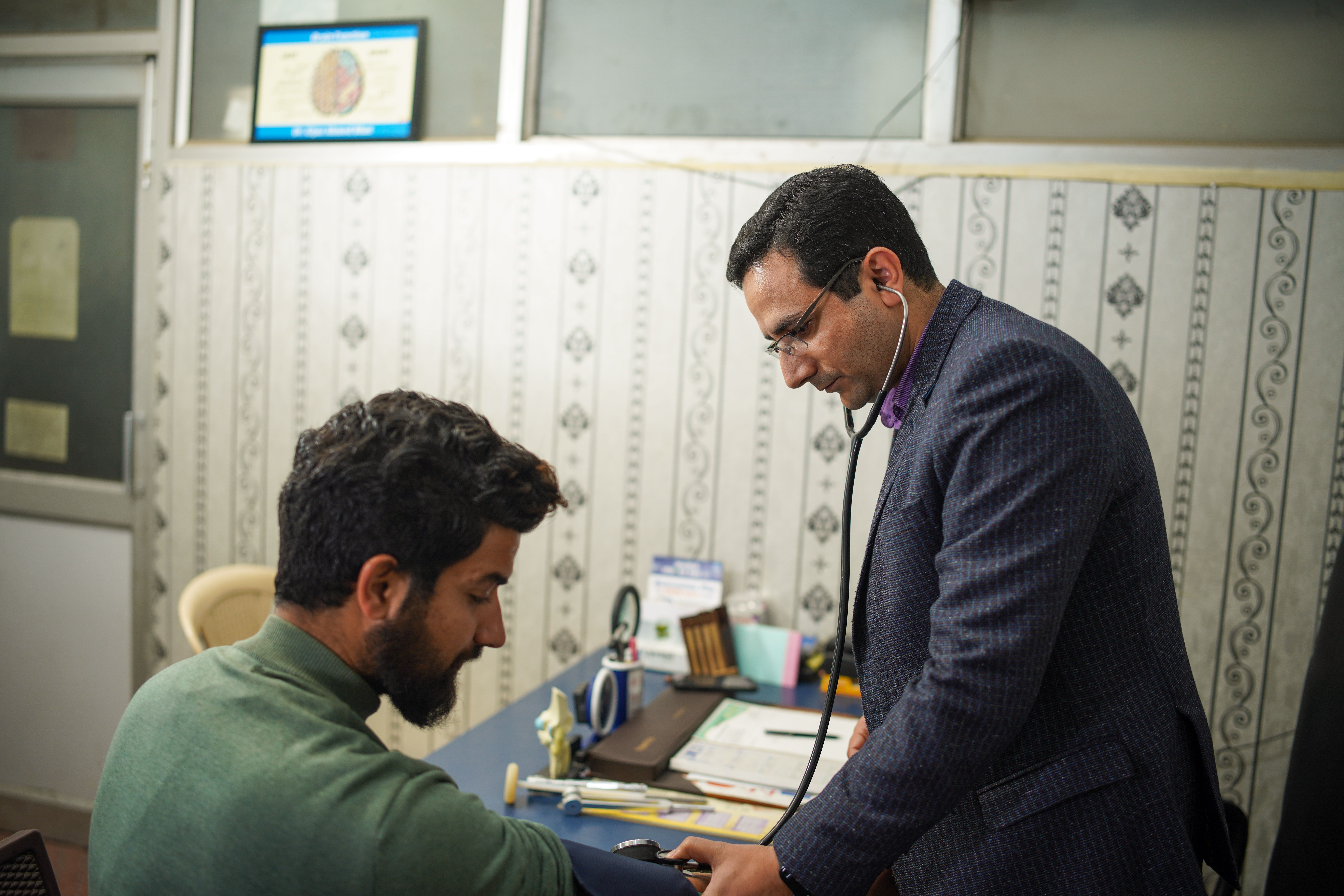
In Pakistan, access to healthcare is still shaped by two things no patient should have to negotiate: where they live and what they can afford. For rural and low-income communities, distance, shortages of essential services and the rising cost of medicines can turn a basic health need into a choice between treatment and household survival. The law recognises the connection between health, life and dignity, yet that promise means little when care remains physically or financially out of reach. A right that cannot be accessed in practice offers little protection to those who need it most.
SHARE
“In healthcare, survival should not depend on your postcode or your pocket,” however, for countless individuals, it continues to be a harsh truth. In every country, a socioeconomic gap influences healthcare results. On one hand are individuals with effortless access to healthcare, living in urban areas where specialized services and pharmacies are readily available. In contrast, a large segment of the population, encountering the same health issues, frequently struggles to receive timely medical attention because of financial limitations and the remote locations of their communities, requiring them to travel considerable distances for necessary care.
Access to health-related services is a basic right that should be guaranteed to every citizen, regardless of their financial situation. In Pakistan’s Constitution, the right to health is not explicitly stated as an independent fundamental right, but it is linked to the fundamental right to life in Article 9, backed by Article 38(d), and bolstered by the country’s international commitments under the ICESCR.
The critical nexus between geography and meaningful healthcare access cannot be overstated. A recent study examining healthcare access barriers in Pakistan highlights significant regional inequalities, pinpointing physical distance from facilities as a major barrier to access. This crisis is particularly severe in rural areas, where ongoing shortages of healthcare workers and vital services at Basic Health Units and Rural Health Centres effectively marginalize local communities, forcing patients to make difficult trips to Tehsil or District Headquarters Hospitals. Such studies reveal a systemic gap between rural and urban areas in access to healthcare, affirming that a person’s location is a critical and frequently biased element influencing the promptness and accessibility of medical assistance.
Distance becomes even more serious when specialised treatment is required. Research on healthcare access among low-income communities in Khyber Pakhtunkhwa discovered that patients often needed to travel to the provincial capital and other locations to access suitable treatment or diagnostic services, while those with chronic illnesses encountered extra transportation expenses. Certain public facilities offered specialist outpatient and diagnostic services exclusively on specific days. This illustrates how geography and cost work together: a patient far from a suitable facility must deal with not only the distance but also transportation expenses, time away from work, and in some instances, the extra cost of pursuing private care when public options are lacking.
The right to health goes beyond the mere existence of a hospital. According to the interpretation of the UN Committee regarding ICESCR Article 12, Healthcare needs to meet criteria of availability, accessibility, acceptability, and quality. Accessibility particularly encompasses economic accessibility or affordability: healthcare must be affordable for all, and low-income households should not carry an excessive burden.
The legal framework for medicinal affordability was significantly advanced by the Sindh High Court in the landmark judgment of Getz Pharma (Pvt.) Ltd. v. Federation of Pakistan (PLD 2017 Sindh 157). The Court clearly acknowledged that the right to health is closely connected to the accessibility of vital medications. Reviewing Pakistan’s constitutional requirements in conjunction with international commitments under the ICESCR, the decision determined that the government’s responsibility to safeguard life encompasses making sure that life-saving treatments are not made unattainable due to excessive costs. This legal acknowledgment essentially converted affordability from just a market factor into an essential element of the basic right to dignity and life.
The significant consequence of this decision is that “availability” in the market does not mean “accessibility” for the individual. When a treatment is available but financially unattainable, the constitutional guarantee of health turns into a theoretical concept instead of a tangible experience. This legal precedent offers the essential perspective needed to examine the systemic economic obstacles that persistently hinder healthcare compliance throughout Pakistan.
The practical consequences of these financial barriers are most visible in out-of-pocket (OOP) expenditure patterns. In Pakistan, medicines alone account for 50.63% of total OOP healthcare spending. Combined with medical charges and lab expenses, the financial strain frequently traps patients in a “vicious cycle of non-compliance.” Instead of adhering to a set regimen, families often have to postpone purchases, miss doses, or stop treatment altogether to meet essential survival needs. As a result, the elevated expense of care not only pressures family budgets but also directly influences clinical results, effectively undermining the “right to health” for the nation’s most at-risk groups.
Recent studies further support this worry. A 2026 multi-regional study of 50 essential medicines in Pakistan found that essential medicines remained unaffordable, particularly those required for diabetes and infectious diseases. Similarly, a 2026 study of cardiovascular and diabetes medicines recognized ongoing differences in both access and cost, especially in rural and economically limited regions. These results change the emphasis from solely the cost of medications to the more critical issue of whether patients can genuinely adhere to the treatment recommended to them. Obtaining a prescription does not equate to effective healthcare access if financial situations compel a patient to postpone, alter, or stop necessary treatment. Affordability is thus directly linked to genuine access to healthcare and, consequently, to the rights to life, health, and dignity, a broader principle evident in Getz Pharma (Pvt.). Ltd. against the Federation of Pakistan.
The disparities within Pakistan’s healthcare system are fundamentally tied to geography. According to data from the 2024 Universal Healthcare Monitoring Report featured in Dawn, National coverage is noticeably uneven: Islamabad scored 63.9%, Punjab came in at 55.5%, while Khyber Pakhtunkhwa and Sindh lagged at 51% and 50.7% respectively, with Balochistan falling far behind at 38.4%. These regional disparities are even more pronounced in rural regions.
A WHO situational analysis of primary care facilities noted that around 30% of crucial positions such as dispensers, medical officers, and female health visitors are still unfilled at Basic Health Units. As a result, a citizen’s access to proper treatment is frequently determined by geographical boundaries, transforming what should be a universal entitlement into a gamble based on location.
A constitutional right that exists solely on paper isn’t a right; it’s an empty promise. When survival hinges on your financial status or your location, the government’s responsibility to safeguard life has faltered. We cannot assess a nation’s dedication to dignity based solely on its legal statements when millions are unable to afford their own survival. Unless healthcare becomes a tangible reality for all citizens, irrespective of their location or financial situation, the “right to life” continues to be a theoretical privilege instead of a basic assurance. It’s time to bridge the divide between the law and the lives of those it aims to safeguard.
About the Author:
Zunaira Zahid is a Legal Officer at Accountability Lab Pakistan and can be reached at zunaira@accountabilitylab.org