
NEWS
IN BRIEF

Accountable governance rests on institutional integrity, public trust and the capacity of systems to remain responsive to citizens’ experiences. Accountability Lab Pakistan’s work demonstrates how innovation, humility, practicality and collaboration inform efforts to strengthen institutional accountability and civic participation. Evidence from its initiatives underscores the significance of locally grounded solutions, sustained institutional engagement and community ownership in advancing governance reform. These experiences also highlight the need for continuous reflection, adaptive approaches and partnerships that extend beyond individual project cycles. Ultimately, durable accountability emerges when public institutions develop the capacity to respond to citizens’ needs and communities have a meaningful role in shaping governance.
SHARE
In today’s rapidly evolving governance landscape, continuous review of governance structures is more crucial than ever. Through its core values, Accountability Lab works to promote a culture of self-accountability within government institutions while empowering citizens to take ownership of their role in governance. Our experience has taught us that this work requires continuous learning, adapting our approaches to changing realities, and reflecting on what works, what does not, and what we can do differently.
The Lab’s work, both within public institutions and the communities it serves, is driven by a commitment to empathy, humility, integrity, innovation and collaboration. These values not only provide a strong foundation for its operations but also guide its interactions with stakeholders, reinforcing organization’s vision of a governance system that is accountable to the people. By embedding these values in every aspect of its work, Accountability Lab is contributing to strengthen the accountability ecosystem in Pakistan and ensure that governance serves the needs of all citizens, especially the most vulnerable.
Integrity: Ensuring transparency and trust
Accountability Lab’s commitment to integrity is evident in its initiatives aimed at fostering transparency and trust in public institutions. For example, the Public Accounts Committee Information System (PACIS), developed by the Lab for the Balochistan Public Accounts Committee, stands as a model of transparency. By automating the monitoring and hearing of audit cases, PACIS allows the public and civil servants alike to track public spending and the accountability process in real-time. This not only enhances transparency but also instills trust in government institutions.
Regular team convenings, periodic impact reviews, projects’ monitoring, assessments and audits are important parts of how we reflect on our work, identify gaps and learn what can be done differently. These processes also create opportunities to engage with our stakeholders, including project participants, funders and public institutions, and to understand their perspectives on our work. We have learned that accountability is not something an organization can build on its own; it depends -on systems that encourage transparency, open dialogue and shared responsibility. Working collaboratively with public institutions, academia, civil society networks and communities allows us to explore how these principles can be strengthened within governance systems as well as within our own organization.
Innovation: Driving change through creative solutions
In an ever-changing governance landscape, innovation is crucial. Accountability Lab consistently encourages creative problem-solving, and nowhere is this more evident than in its Integrity Innovation Lab initiative. This program works with civil servants, public institutions, experts and academia across Pakistan to explore new approaches to governance challenges, using design thinking and problem-solving techniques to foster creativity in policymaking.
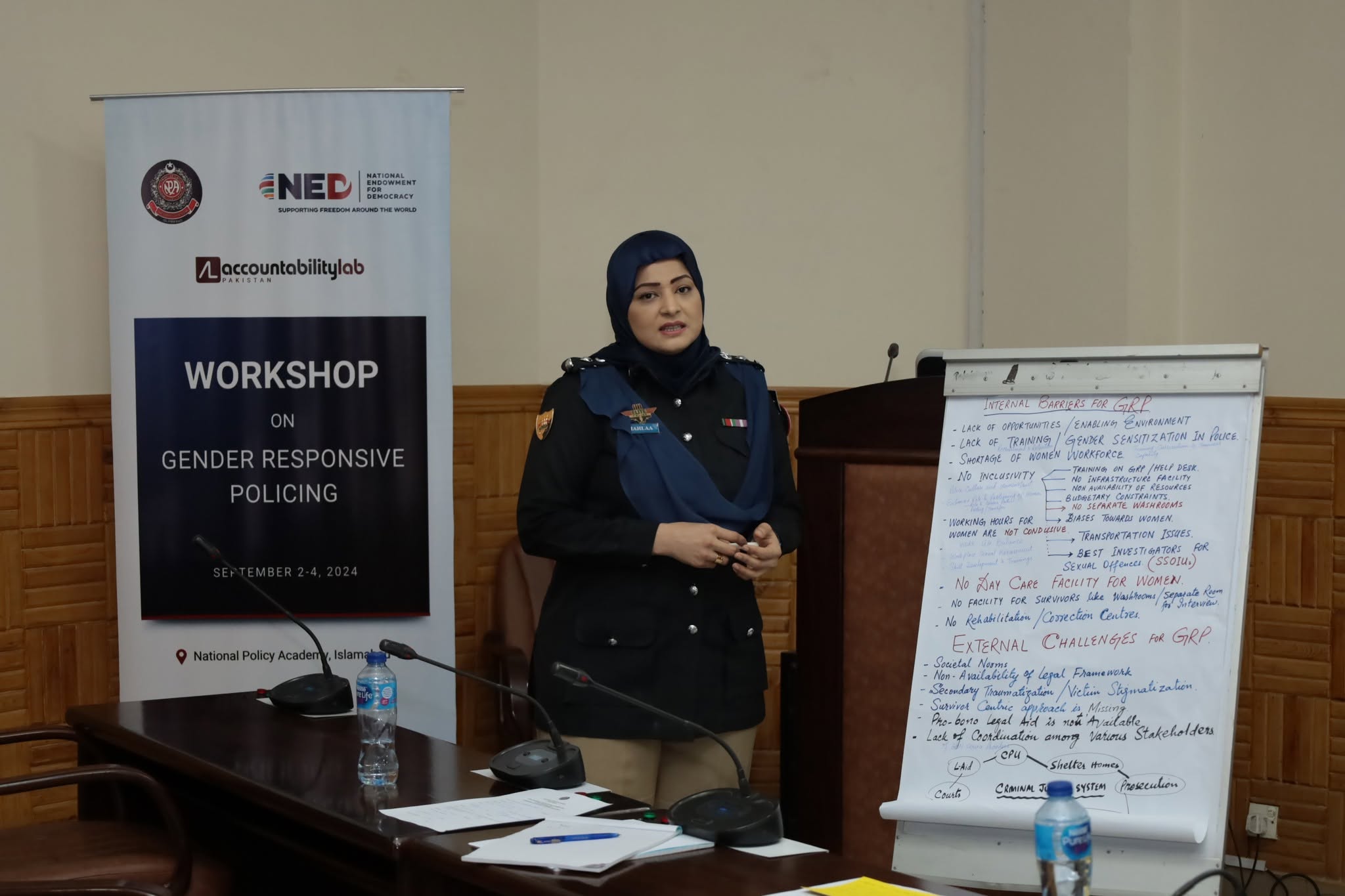
One of the standout examples is the Lab’s collaboration with the National Police Academy, where it introduced Gender Responsive Policing workshops. These workshops not only train police officers to be more empathetic and citizen-focused but also equip them with innovative tools to address gender-based violence more effectively. By incorporating forward-thinking approaches, Accountability Lab is driving a shift in governance, encouraging civil servants to adopt new, citizen-centered approaches.
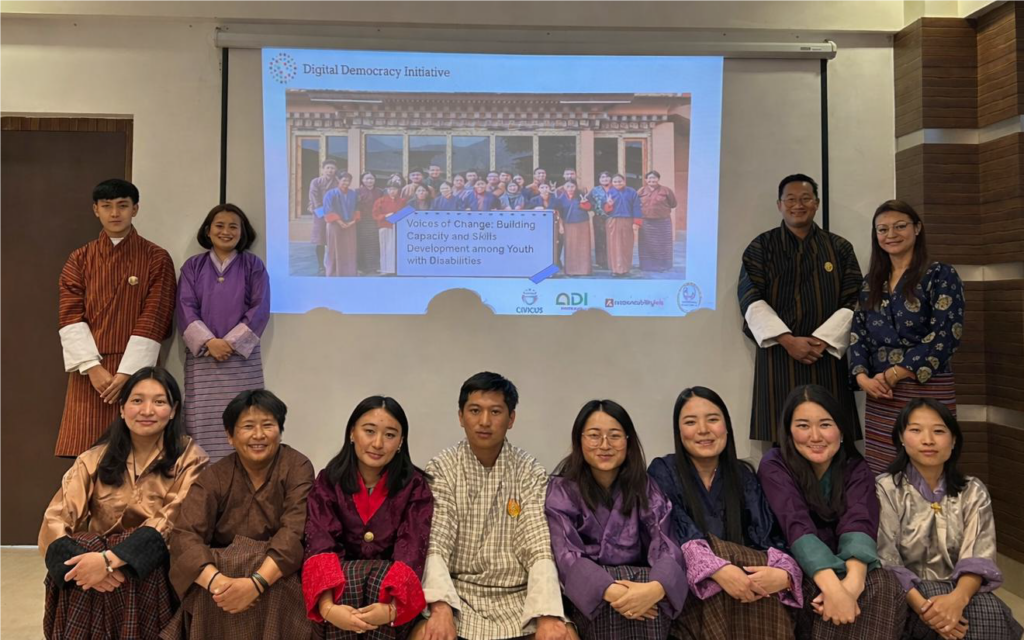
Our experience through the DDI South Asia has further shaped our understanding of innovation. Working with grassroots organisations across seven countries in South Asia has shown us that an approach that works in one context may need to be adapted in another. Organisations working on digital inclusion and civic participation have had to adjust their plans in response to local needs, institutional limitations and the realities of the communities they serve. By bringing these experiences together, we have created opportunities for organisations to share practical lessons, reflect on what did not work as expected, and learn from one another. This has reinforced our understanding that innovation is not simply about introducing new ideas; it is also about remaining open to feedback, adapting to changing circumstances and learning from the people closest to the challenges we seek to address.
Humility: Listening to local voices
Humility is at the heart of Accountability Lab’s work, acknowledging that true change comes from within communities. One example of this is the Integrity Icon Pakistan campaign, which celebrates and honors civil servants who make a positive impact in lives of citizens. The campaign also creates space for community members to recognise and share their experiences of public service, ensuring that the process of identifying honest and committed civil servants reflects the voices of the people they serve. This reinforces an important lesson for us: recognising integrity should not be limited to institutional assessments; it should also include citizens’ experiences, perspectives and participation.
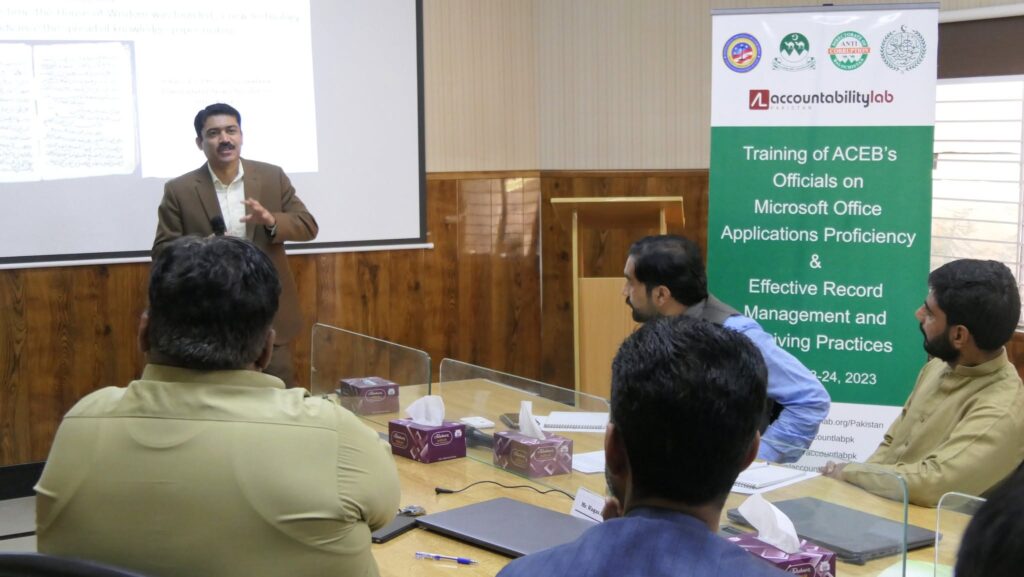
Accountability Lab’s work with the Anti-Corruption Establishment Balochistan (ACEB) reinforces the importance of understanding institutional challenges and working alongside public officials to address them. Through the institutional capacity-building initiative, AL supported investigators and prosecutors in strengthening their understanding of anti-corruption legislation, financial investigations and techniques for tackling white-collar crime. The initiative also envisaged the establishment of a specialised Financial Investigation Unit and stronger coordination between anti-corruption agencies. During the implementation period, the project recorded a 350% increase in the registration of FIRs and a 300% increase in arrests related to corruption cases. While these figures are encouraging, lasting change depends on more than capacity building or external support. Our experience has reinforced the importance of combining institutional capacity-building with sustained outreach and engagement with academia, youth and local communities. Direct engagement between ACEB officials and communities played critical role in building trust, encouraging public participation and making accountability processes more accessible. Ultimately stronger accountability systems depend not only on capable institutions but also on the trust and engagement of the people they serve.
These experiences remind us that accountability reform is a long-term process, not an outcome that can be achieved through a single intervention. Building trust, changing institutional practices and strengthening relationships between public institutions and communities require time, consistent engagement and a willingness to keep learning. Lasting change depends on listening, adapting and working alongside the people and institutions at the heart of the process.
Practicality: Building sustainable and scalable solutions
Across our work with public institutions, civil society and grassroots organisations, we have learned that a promising idea is only a starting point. Its real value depends on whether people can use it, whether the systems around it support its implementation, and whether it responds to a problem that matters in practice.
Our experience across multiple projects has shown us that developing a tool, delivering training or introducing a new mechanism is rarely enough on its own. Each requires attention to the people expected to use it, the institutional capacity and resources available, and the relationships needed to sustain the work. This has reinforced the importance of looking beyond immediate project deliverables and asking what it will take for a solution to remain useful after our direct involvement ends.
We have encountered a similar lesson through our work supporting people with ideas for improving accountability. Through initiatives such as the Accountability Incubator and people developing practical, locally grounded solutions to accountability challenges, we have seen the value of starting with the problem rather than assuming that every challenge requires a large or technology-driven intervention. Sometimes, a relatively small initiative can open up new possibilities, provided it responds to a genuine need and has the right support around it. Mentorship, access to networks and opportunities to test ideas can be just as important as initial funding.
Our experience has taught us that practicality is not only about choosing the most cost-effective or simplest option. It is also about asking the right questions early: Who will use this solution? What resources will it require? Can the relevant institution or community continue it after the project ends? These questions do not guarantee sustainability, but they help us design initiatives with a clearer understanding of what it takes to move from a promising idea to a lasting change.
Collaboration: Strengthening partnerships for greater impact
Accountability challenges rarely sit within the boundaries of a single institution. Our experience has shown us that meaningful progress depends on connecting people who bring different perspectives, expertise and relationships to the same problem. Through our work with government departments, universities, civil society and local communities, we have learned that collaboration is not simply about delivering activities together; it is about building relationships that enable people to contribute to solutions and take shared responsibility for them.
Our women leadership initiative in Haripur, supported by the Australian High Commission’s Direct Aid Program (DAP), and implemented in collaboration with district administration and department of health, trained women leaders from nine union councils to share verified health information and counter misinformation during the COVID-19 pandemic. Over six months, they reached approximately 5,000 community women directly and more than 100,000 people indirectly through household visits, community discussions and other outreach mediums. The experience showed us how local leadership can connect public institutions with communities, while reinforcing that trust often depends on who communicates information and how closely they understand people’s everyday realities.
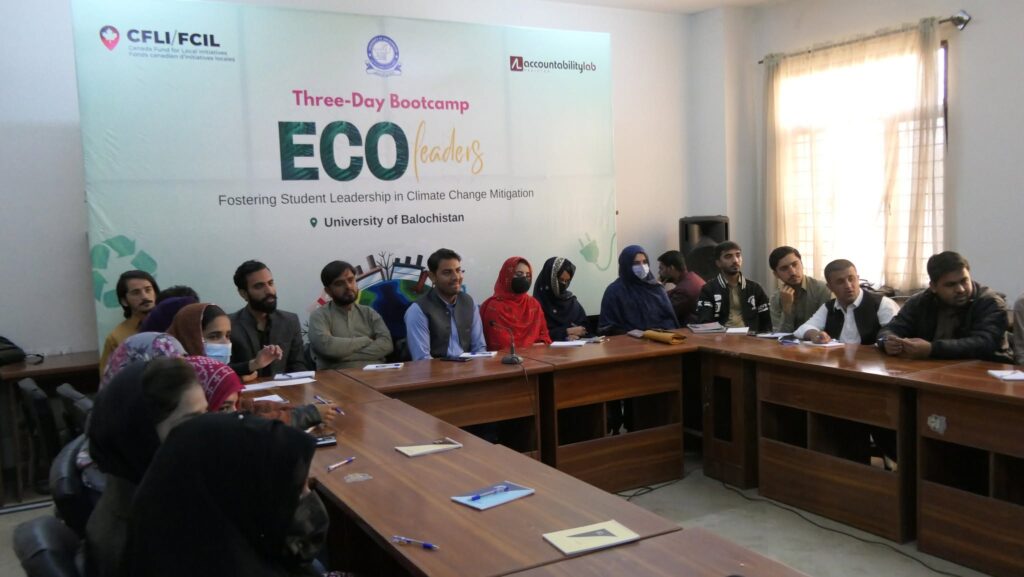
We have seen similar opportunities for collaboration through our Eco-Leaders initiative, supported by the Canadian Fund for Local Initiatives (CFLI), which connects young people, universities and communities around climate action. Our Youth Peace Incubation Program and Pakistan Emerging Leadership Initiative have also created spaces for young people to engage with questions of peacebuilding, inclusion and civic responsibility by establishing incubation centers at nine public sector universities across Pakistan. These experiences have reinforced the importance of treating young people and students not simply as beneficiaries of activities, but as contributors who can bring fresh perspectives and take ideas into their own institutions and communities.
Our work under the Strengthen Community Resilience to COVID-19 (SCRC), across ten districts in Khyber Pakhtunkhwa and Sindh, further highlighted the importance of connecting community outreach with public health institutions. Sharing reliable information was important, but so was creating stronger links between communities and the institutions responsible for responding to the pandemics and citizens’ concerns.
Across these projects, we have learned that bringing people together is only the beginning. Collaboration requires sustained dialogue, respect for different perspectives and a willingness to adapt. Lasting progress depends on whether these relationships continue beyond individual activities and whether the people involved find relevant institutions responsive and feel a genuine sense of ownership over what follows.
Moving towards more accountable governance:
For us, accountable governance begins with a simple question; are public institutions responding to the needs and experiences of the people they serve? Our work, from supporting institutional reforms and developing tools for greater transparency to engaging communities and young people, has shown us that there is no single answer or quick fix. We continue to learn that accountability requires capable institutions, meaningful public participation and a willingness to listen, reflect and adapt. Our core values help us navigate this work, but putting them into practice requires constant reflection. We do not always have all the answers. What matters is continuing to learn with our partners, recognising where approaches need to change, and supporting systems that enable public institutions and citizens to work together more effectively.
About the Author:
Asif Farooqui is Director Programs at Accountability Lab Pakistan and can be reached at asif@accountabilitylab.org