
NEWS
IN BRIEF

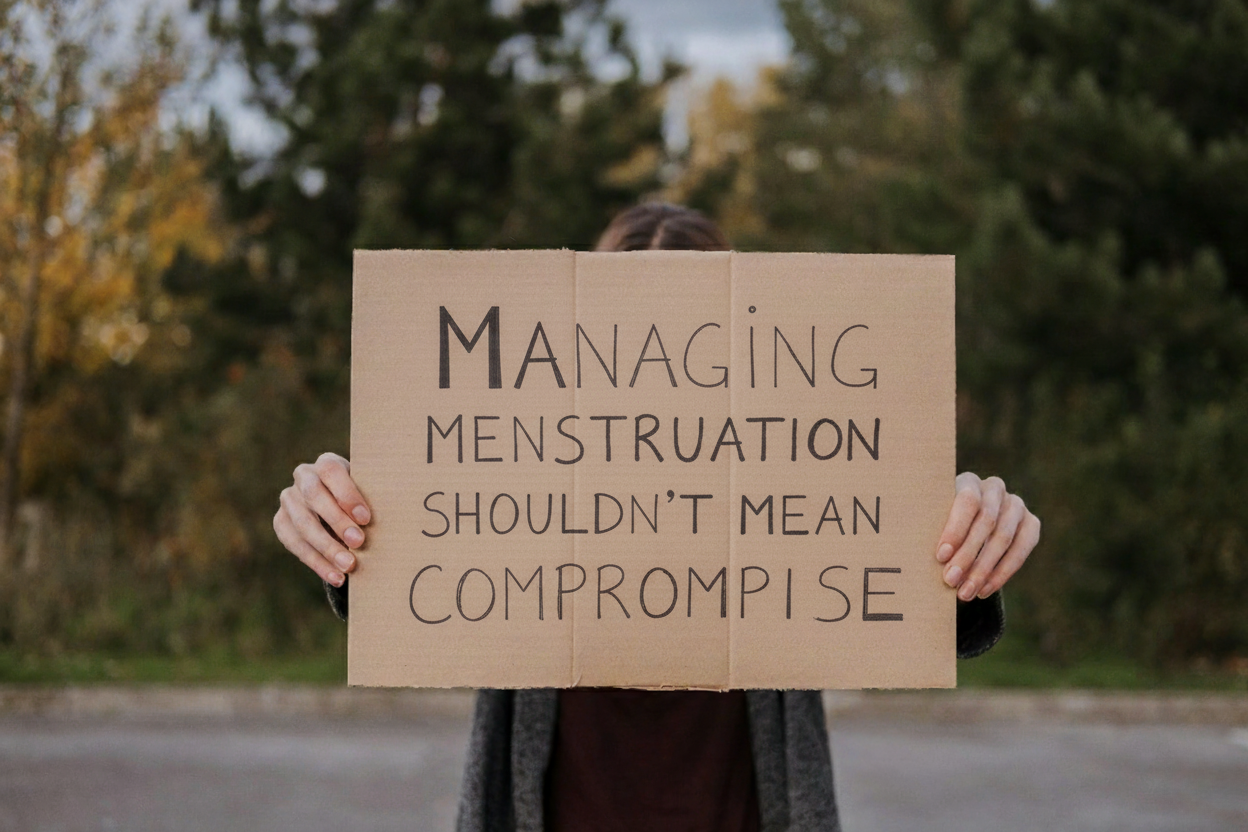
Millions of women and girls in Pakistan manage their periods under conditions that compromise their health, dignity, and safety. From flood camps and urban slums to schools and workplaces, lack of affordable menstrual products, inadequate sanitation, harmful cultural taboos, and weak policy support force menstruation into silence and hardship. This reality turns a natural biological process into a daily struggle, where women are left to cope quietly with pain, exclusion, and unmet needs that reflect deeper inequalities in governance and social priorities.
SHARE
Sleeping in tents held together with thin wooden sticks, women displaced by floods struggle to manage their periods with dignity. When clothes are stained with menstrual blood, there are no spare garments, no private bathrooms and often no sanitary pads.
“We are struggling to get pads for when we get our period. And even if we do, there are no proper bathrooms to use,” said Aleema Bibi, 35. “We go to the homes nearby to use the bathroom.”Another woman, Jameela, described waiting for men in neighbouring houses to leave before she could change her pad in a makeshift space beside a cowshed. “We wait until it’s empty,” she said. “Only then can we go.” For many women in flood-affected camps across KP, Punjab and Sindh, menstruation becomes something to endure quietly. Not because it is rare, but because speaking about it is discouraged, even in a crisis.
“We escaped death,” Jameela said later. “But this misery is no less.”
These experiences are not confined to emergencies. They reflect a much wider reality across Pakistan where menstruation is shaped by poverty, weak service delivery, policy neglect, and deep cultural silence.
Menstruation and Access: What the Data Shows
Pakistan has 126 million women, which includes 118 million girls who menstruate, yet access to safe menstrual hygiene management (MHM) remains severely limited. Across urban slums, rural districts, and disaster-affected areas, research consistently shows that most women do not have access to appropriate products, private spaces, or clean water.
Key findings from national and city-based studies reveal:
- Only 17% of women use commercially produced sanitary pads
- 66% rely on cloth
- 49% rewash and reuse this cloth, without safe washing or drying
- In Islamabad, studies show:
- 69% of adolescent girls avoid bathing during menstruation
- 58% do not wash their genital area properly
- 56% hesitate to discuss menstrual health altogether
- 38.8% report sanitary pads are unaffordable
- 56.6% say pads are unavailable in schools
- 54.8% feel embarrassed asking for menstrual products
In the slums of Karachi and Lahore, women describe reusing cloth for multiple cycles because they lack money, water, or private spaces. In flood-hit districts near Chung, Lahore, temporary camps often lack toilets entirely, making even basic hygiene impossible. Menstrual care becomes a daily calculation of visibility, risk, and survival.
Health Risks Women Carry Quietly
A Karachi-based study comparing sanitary pad users and cloth users found a higher prevalence of lower reproductive tract infections among cloth users. Qualitative research in Pakistan’s slums documents recurring skin irritation, infections, and untreated gynaecological symptoms often managed at home due to shame or cost.
Poor menstrual hygiene also affects education and livelihoods. Girls miss school once they reach puberty. Women in employment report skipping work or enduring pain silently because toilets, water, and breaks are unavailable. Menstruation, in these contexts, becomes not just a health issue but a barrier to participation in public life.
When Menstrual Care Is Taxed
Despite its scale, menstrual health remains marginal in public policy. One of the most significant structural barriers is cost. One study found that only 16.2% of women in rural areas used pads due to the cost. In Pakistan, menstrual products are treated as taxable goods. Under the Sales Tax Act of 1990, sanitary pads are subject to:
- 18% sales tax on locally manufactured products
- Up to 25% customs duties on imported products and raw materials
UNICEF estimates that taxation can raise retail prices by up to 40%, with a single pack of pads costing around Rs450 in a country where the average monthly income is approximately Rs33,000.
This policy approach is now under judicial scrutiny. In Mahnoor Omer v. Federation of Pakistan and a parallel petition before the Sindh High Court, petitioners argue that taxing menstrual products violates women’s constitutional rights to equality, dignity, and social justice.
Meanwhile, the IMF rejected the FBR’s request for immediate removal of GST on sanitary pads and contraceptives, citing Pakistan’s revenue shortfall of Rs13.979 trillion for FY26. Officials noted that mid-year tax exemptions were not permissible under the program, allowing relief only in the FY2026–27 budget. The FBR estimated that removing GST on contraceptives would reduce revenue by Rs400–600 million.
These developments highlight a fundamental contradiction: while menstruation is unavoidable, its management is treated as optional. Fiscal and policy barriers combine with infrastructural and cultural inequities to deepen period poverty, particularly affecting women and girls in low-income urban and rural settings.
Managing Periods Without Infrastructure
Pakistan is one of the countries most affected by period poverty. According to UNICEF, nearly 44 per cent of girls lack the minimum resources needed to manage their periods safely, whether at home, school, or work, often preventing them from attending school or earning a livelihood.
For many women in Pakistan, managing menstruation is a daily challenge long before disasters strike. Broken toilets, lack of clean water, no disposal facilities, and absence of emergency supplies in schools leave adolescent girls unprepared and vulnerable. In workplaces, women often have no access to private washrooms or permission to take breaks, forcing them to endure discomfort and health risks in silence. Limited access to menstrual hygiene products, the widespread use of rags or cloth instead of sanitary pads, and insufficient information double the risk of infections and long-term reproductive health complications.
Menstruation and the Culture of Silence
Material deprivation is reinforced by stigma. Across Pakistan, menstruation is widely framed as impure. Girls are discouraged from bathing, cooking, or participating in daily activities during their periods. Many are taught not to speak about menstruation at all.
Multiple studies in Pakistan indicate that more than half of adolescent girls experience embarrassment, shame, or social restrictions during menstruation. Mothers are often the primary source of information, but in the absence of accurate education, myths are passed down unchanged. A study on menstrual health showed that eight out of 10 girls felt embarrassed to discuss periods, and almost half had never been told about menstruation before it began. Silence becomes routine, pain is normalised and seeking care is delayed. Menstruation, in this context, is not just a biological process; it is a social boundary.
Where Accountability and Governance Matter
These realities reflect what Accountability Lab Pakistan’s work continues to highlight: when women lack a voice, their needs remain invisible.
Through Gov-HER-Nance, implemented with the Department of Health in Khyber Pakhtunkhwa, Accountability Lab Pakistan worked with thousands of women to strengthen participation in health-related decision-making. Community dialogues, feedback mechanisms, and awareness campaigns revealed gaps in service delivery, particularly around hygiene, misinformation, and access.
Similarly, Civic Action Teams (CivActs) and citizen helpdesks demonstrate how structured community feedback can surface systemic failures in health and education. Yet menstrual health concerns are often underreported, not due to lack of urgency, but because stigma suppresses expression.
Returning to the Women We Began With
Back in the flood camps, women continue to wait for privacy, for water, for relief kits that include more than food. In urban slums, girls continue to miss school quietly each month.
Their experiences remind us that menstrual health management is not about awareness alone. It is about dignity, access, and accountability.
Until menstrual health is recognised as a public responsibility embedded in policy, service delivery, and governance, millions of women in Pakistan will continue to manage their periods not with choice, but with compromise and mostly, in silence.
About the Author
Almas Jamil is Communications Associate at Accountability Lab Pakistan and can be reached at almas@accountabilitylab.org