
NEWS
IN BRIEF

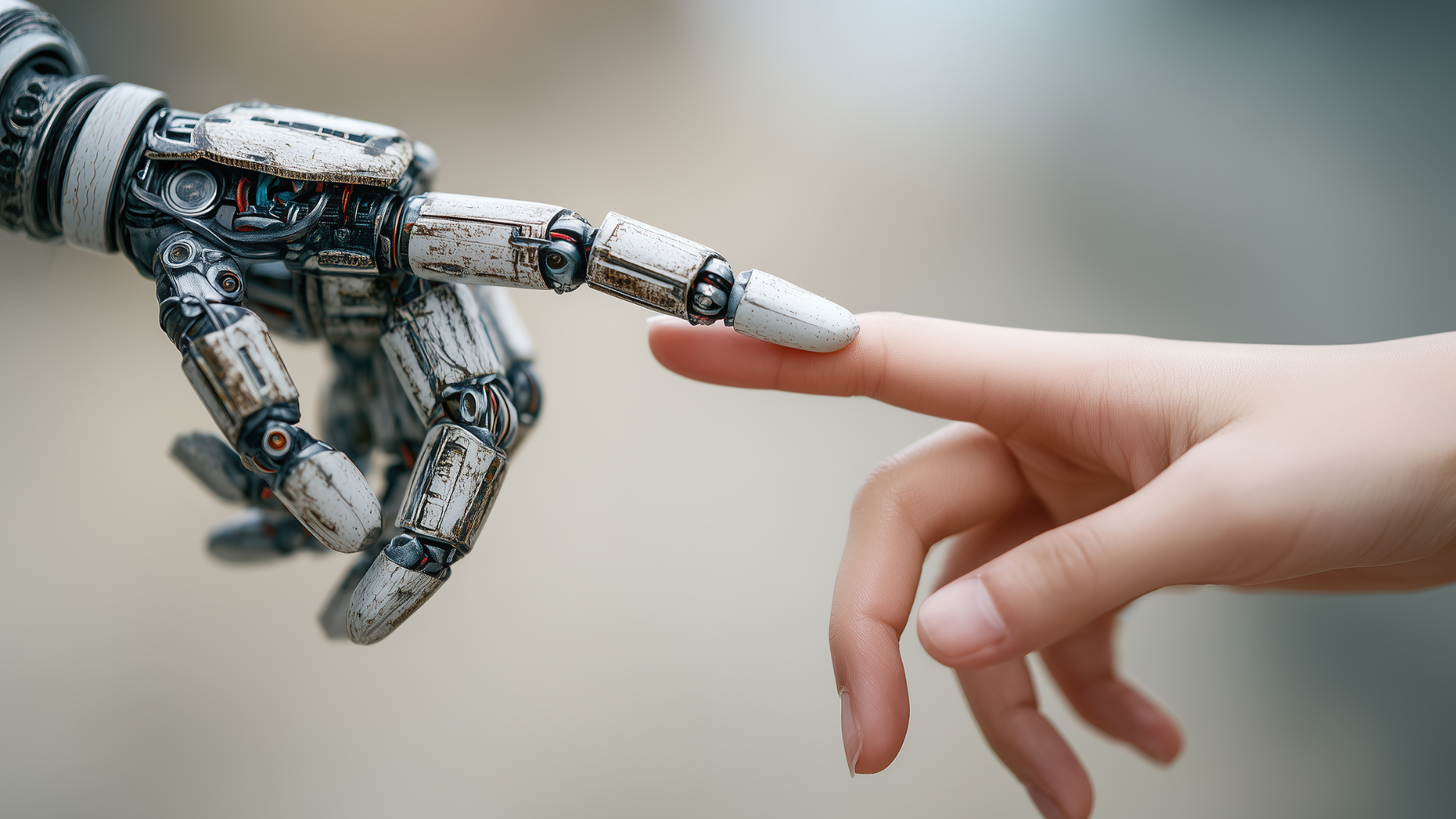
As a communications professional at Accountability Lab, I have witnessed firsthand how the arc from imagination to reality unfolds. Technologies once dismissed as fantasy are now integral to our daily lives. Yet, this rapid transformation brings profound ethical and emotional considerations. In Pakistan’s development sector, empathy is not an optional virtue; it is the currency of trust and human dignity. While AI can analyze data, draft reports, or even simulate emotional support, it cannot replace the intuition, compassion, and accountability that only humans provide.
The real challenge lies not in technological capability but in conscientious stewardship. AI carries tremendous potential, yet it can amplify inequities, isolate the vulnerable, and erode social bonds if deployed without care. Our responsibility is clear: ensure technology remains a tool guided by human conscience, not a substitute for it. Progress must be measured not only by innovation but by the lives it uplifts and the communities it serves. Imagination gave us the blueprint; empathy must shape the structure.
SHARE
I was born in the late 1990s, and I still remember the crackle of dial-up internet and the first simple cellphones. Movies and books of my childhood such as Star Trek’s glowing transparent tablets, depicted fantastical technologies. Back then, experts often dismissed such ideas as pure fantasy. Today, they are part of our everyday lives. The video call that seemed miraculous in 2001 now feels like it could be taking place in any office today. This shouldn’t surprise us. In the Saturday Evening Post interview, Albert Einstein said that knowledge is limited but imagination encircles the world. As a Computer Science scholar raised on idea of sci-fi, I’ve seen this play out repeatedly, visions from decades past often become our reality. Science fiction and art are not distractions; they are the prototypes of tomorrow’s tools. They train our collective imaginations on what may come so we are not utterly shocked when it does.
I grew up alongside those changes. As a child, my first computer programs ran on floppy disks. By university, I was coding on sleek laptops with internet speeds orders of magnitude faster. Now, as a Communications Manager at Accountability Lab, I make video calls and use collaborative apps daily. The arc from imagination to reality is not some distant inevitability, it is my lived experience. In the 1970s, a person being beamed into a colleague’s home via a giant screen was an absurd joke. In the 2020s, it is an ordinary Zoom call. That journey of disbelief to acceptance is the backdrop of my career. It taught me early on that imagination is the blueprint of reality.
From Speculative Fiction to Emotional Reality
My fascination with imagination extends beyond gadgets. In film and literature, we have long explored not only what machines could do but how they might change us. A telling example is Spike Jonze’s 2013 film Her, in which a lonely man falls in love with an AI operating system. Back then, many viewers felt the story was a cautionary fantasy, not a realistic prediction. But a decade later, it is eerily familiar. Today millions of people form emotional bonds with chatbots and virtual companions. A recent analysis points out that what was once seen as science fiction in Her has rapidly become a reality for individuals all over the world as more AI companions are created.
This shift is not mere novelty. AI assistants and chatbots (beyond rudimentary Siri and Alexa) have evolved into digital personas designed to provide emotional support. Companies report hundreds of millions of users engaging with these AI companions. For example, Snapchat’s My AI reportedly serves over 150 million users, the chatbot Replika has around 25 million users, and China’s Xiaoice chat service claims 660 million. They weren’t created just to organize calendars, many people use them to vent frustrations, seek advice or simply feel heard. In one survey, about two-thirds of Replika users said their AI friend helped reduce feelings of loneliness or anxiety.
These trends matter. They show AI reshaping not just workflows but the subtler domain of feelings and relationships. As a development-sector communicator, I find this both intriguing and unsettling. My colleagues and I value empathy and human connection above all. Yet here are people, sometimes vulnerable ones, like isolated teens, finding companionship in code. Research suggests that artificial companions can indeed provide psychological relief. A 2025 Harvard Business School study explicitly tested this and proposed that interacting with AI companions alleviates feelings of loneliness. After each chatbot session, users reported temporary drops in loneliness and the effect could repeat over days.
Still, part of me wonders what price are we truly paying? Chatbots may seem empathetic, but their empathy is a simulation, derived from patterns in data. They do not feel. And yet because they respond in caring language, people can come to rely on them. Ours is an era where someone might confide in an AI confidant in the morning and then meet no human friends all day. Studies from MIT’s Media Lab and OpenAI have found that the heaviest users of ChatGPT, those having emotionally expressive conversations, were often lonelier and more socially isolated in real life. In other words, some people turn to AI because they lack human connection and the technology can both alleviate that loneliness and potentially deepen the dependence.
This is not doom-and-gloom speculation, it is happening now. The Guardian reported that heavy ChatGPT users reported higher loneliness and fewer offline relationships. Dr Andrew Rogoyski, director at the Surrey Institute for People-Centred Artificial Intelligence, warned that using AI as a confidant is like open-brain surgery without knowing the long-term impact on our emotional wiring. We have seen how social media algorithms created problems we barely anticipated. With AI, the effects could be broader and deeper. In Her, the notion that someone might fall for an AI seemed futuristic, now the lines are already blurring. The question shifts from “If this will happen” to “How do we manage it?”
In the Development Sector, Empathy Matters
Working in Pakistan’s development sector has only sharpened my conviction that AI cannot be treated as value-neutral. Our mission is always to serve people, their needs, dreams and rights. The currency of our work is trust, empathy and human dignity. We cannot outsource those. A machine can analyze data or generate content, but it cannot truly respect a woman’s story of hardship, nor honor the lived experience of a farmer nor inspire grassroots movements with genuine compassion.
International guidelines echo this. UNESCO’s global AI ethics recommendation (adopted 2021) explicitly makes the protection of human rights and human dignity, the cornerstone of any AI system. It insists on human oversight and values at every step. This is not bureaucratic rhetoric. It is a reminder that no algorithm should replace the human conscience. AI tools can assist with data analysis or even help draft reports, but they cannot replace the face-to-face conversation that builds community trust or the gut instinct that only humans have. Without emotional intelligence, development work loses its moral grounding.
At Lab, we still go out into communities and listen to their problems directly, because that human connection is irreplaceable. This stance is not Luddite nostalgia, it’s pragmatic ethics. No startup pitch or technical demo will ever automate the kind of empathy that community organizers or aid workers must carry. Machines lack the heart and in development work, the heart must lead.
The Real Risk: Unintended Consequences
Ironically, the biggest danger of AI is usually not some grand hypothetical robot takeover plot. It is the mundane but profound negative side-effects that come with its misuse. Consider bias; AI learns from historical data, if that data reflects inequality, then the AI will amplify them. For instance, a recent study found that men who described mental health struggles on platforms like Reddit received less empathetic responses from AI chatbots than women did.
Other risks include misuse and over-reliance. A surveillance system powered by AI might help catch criminals, but it could also be turned against activists or journalists. An AI model good at predicting loan defaults could improve financial inclusion or, if deployed carelessly, could unfairly deny credit to underprivileged groups. UNESCO warns that AI has begun to embed biases and compound existing inequalities, thereby causing further harm to already marginalized groups. These are not abstract worries, they strike at social justice and human rights.
Even proponents of AI admit these dangers. Google’s CEO Sundar Pichai has cautioned that current AI tools are prone to some errors, and urged us not to blindly trust their outputs. And Sam Altman of OpenAI, has echoed this sentiment. He acknowledged that his own child will grow up knowing only an AI-dominated world, and warned that while AI will be part of everyday life, we must draw the line now on what roles it plays. Likewise, Satya Nadella, CEO of Microsoft, has been vocal about the enduring importance of empathy.
In Pakistan, the cost of neglecting these precautions can be high. Imagine an AI-powered welfare system that optimizes services only for urban elites because that is where digital data is plentiful, ignoring rural minorities with no digital footprint or an election manipulated by deepfake videos passed off as real. These are not far-fetched conspiracies, they are entirely possible if we innovate without safeguards. Responsible preparedness is not fear-mongering, it is simply part of conscientious development. We speak of progress but not at the cost of the people we claim to serve.
Shaping the Future with Empathy
My view is one of tempered optimism. Imagination gave us the blueprints, now our ethics and empathy must guide the construction. In the development sector especially, we cannot afford to be passive observers. We cannot simply sleepwalk into the future. Instead, I see a choice, to craft our policies and cultures with intention. This means insisting that AI remain a tool, not a replacement for human conscience. It means investing in education and digital literacy so communities can benefit from AI without becoming vulnerable to its pitfalls. It means prioritizing the human stories behind every data point, as Accountability Lab always does.
My generation grew up dreaming of the future from sci-fi novels and Pixar movies. That dream is now materializing faster than we ever expected. The challenge now is to blend those dreams with our deepest values. So, I close with a hope that the future we imagined with childlike wonder is also the one we build with mature wisdom. When the history books are written, let them say we had the imagination to dream big and the empathy to never forget who we are serving. Those will be the true hallmarks of progress.
About the Author
Muhammad Abubakar is program and communications manager at Accountability Lab Pakistan, and can be reached out at mabubakar@accountabilitylab.org