
NEWS
IN BRIEF

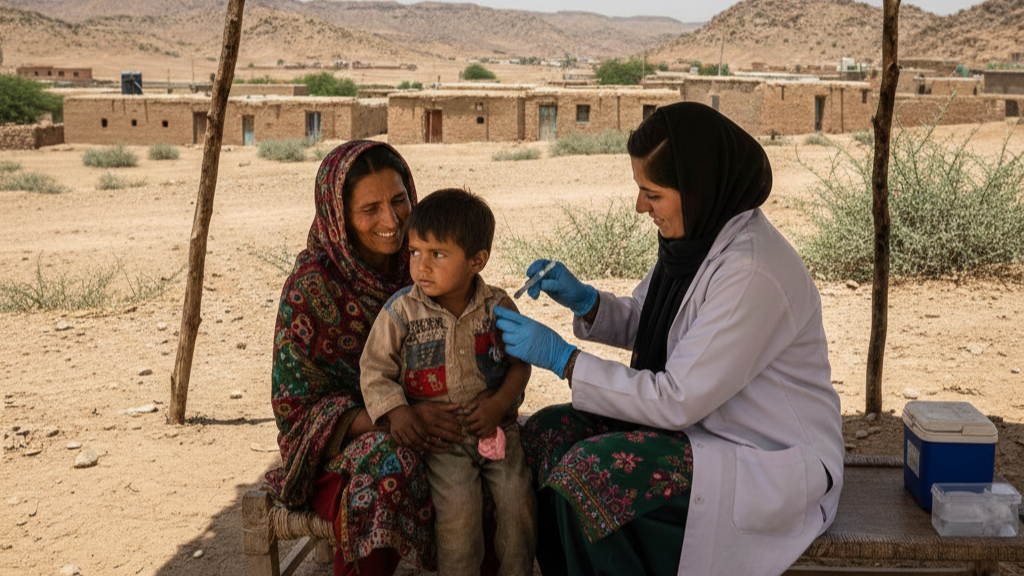
Balochistan’s immunization landscape faces complex challenges. Geographic isolation, dispersed populations, limited infrastructure, and low literacy amplify the risks of vaccine-preventable diseases, while social norms, gender barriers, and misinformation hinder uptake. Despite Pakistan’s Expanded Programme on Immunization (EPI) providing free vaccines against 12 major diseases, coverage in the province remains far below national averages, leaving children vulnerable to measles, polio, and other preventable conditions. Supplemental immunization campaigns (SIAs) targeting children aged 6–59 months, alongside routine vaccination efforts, have been essential in raising immunity levels, particularly in remote, low-coverage areas.
Campaigns and routine programs reveal that gaps in governance, human resources, cold chain infrastructure, and data systems undermine long-term immunization gains. Yet, frontline health workers, community mobilizers, and partnerships with civil society organizations demonstrate the potential to overcome these challenges. Strengthening routine immunization, sustaining campaign successes, leveraging local community networks, and improving accountability and planning are critical to ensuring that every child in Balochistan is protected from preventable diseases.
SHARE
When I first assumed responsibility for supporting immunization efforts in Balochistan, it was evident that the province faced a complex composition of vaccine preventable disease burdens layered upon deep structural health system challenges. Balochistan’s unique socioeconomic and geographic context sprawling terrain, small, dispersed populations, limited infrastructure, and low literacy adds to the risks associated with vaccine preventable diseases.
Pakistan’s Expanded Programme on Immunization (EPI) provides free vaccines for children against 12 major diseases, including TB, Polio, Diphtheria, Pertussis, Tetanus, Hepatitis B, Hib, Pneumococcal, Rotavirus (diarrhea), Measles, and Rubella (MR). Over time, new vaccines like PCV, Rotavirus, MR, and Typhoid (TCV) were added to the original six, covering more diseases and using newer formulations for better protection.
The EPI schedule is designed to protect children from birth through 23 months of age with age-appropriate vaccines administered at static centres and through outreach sessions.
Despite this framework, routine immunization uptake in Balochistan has historically lagged behind other provinces. National surveys have documented immunization coverage rates well below national averages, with only a fraction of children in the province receiving the complete routine vaccine schedule. For example, past demographic health data estimated that full immunization coverage in Balochistan was under 40 percent considerably lower than the national average of around two-thirds. [1][2]
The consequences of these coverage gaps are predictable yet devastating: measles outbreaks, ongoing polio transmission, and persistent susceptibility to neonatal tetanus and other preventable conditions persist. Pakistan remains one of only two countries in the world where wild poliovirus type 1 continues to be detected, and Balochistan’s immunity profile especially for serotypes of polio is consistently lower than in other regions, highlighting substantial gaps in herd immunity.
While 2025 has seen a downward trend in national polio cases with campaigns targeting over 45 million children security threats, misinformation, and operational challenges continue to affect coverage in high risk areas including Balochistan.
Scope and Objectives of Immunization Campaigns
The immunization campaigns I have led or supported have had dual objectives:
- To address disease burden through supplemental immunization activities (SIAs), to rapidly raise immunity levels for diseases like polio and measles that are prone to outbreaks.
- To strengthen routine immunization, ensuring children are fully vaccinated according to the EPI schedule (e.g., BCG, OPV/IPV, pentavalent, pneumococcal and measles-Rubella vaccines) so that immunity gains are sustained beyond campaigns.
The targeted regions of these campaigns have included all 36 districts of Balochistan, prioritizing remote border areas, districts with historically low coverage, and nomadic or migrant populations.
Campaign modalities typically combine door to door vaccination, fixed site sessions at health facilities, and mobile outreach teams designed to reach geographically isolated settlements. These efforts are supported with detailed microplanning, incorporating settlement listings, household mapping, and logistics coordination to ensure vaccine availability and cold chain integrity.
During polio SIAs, for instance, teams vaccinate children under five years of age irrespective of prior vaccination status, while measles SIAs focus on children aged 6-59 months. Both rely heavily on door-to-door outreach to minimize barriers to access.
Target Age Group for Campaigns
For measles containing vaccine (MCV) and most integrated child survival immunization campaigns, the target age group is between 6-59 months. This age bracket reflects epidemiological evidence that infants below nine months in high risk, outbreak prone, and low coverage settings remain vulnerable to measles infection and can safely benefit from an early protective dose during supplementary immunization activities (SIAs). The routine EPI schedule subsequently ensures completion of age-appropriate doses.
Accordingly, immunization campaigns in Balochistan have typically targeted:
- Children aged 0–11 months for routine immunization catch up
- Children aged 6–59 months for measles and integrated SIAs
- Children under five years (0–59 months) for polio SIAs
This approach is particularly relevant in Balochistan, where delayed routine immunization, high zero dose prevalence, malnutrition, and repeated population movement significantly increase susceptibility among younger infants.
Why 6–59 Months Matters in Balochistan
From field experience, expanding the lower age threshold to 6 months has been critical in:
- Reducing measles outbreaks in districts with chronically low routine coverage
- Protecting malnourished infants whose maternal antibodies wane earlier
- Capturing missed and zero dose children during campaigns
- Compensating for weak routine immunization performance in remote and insecure areas
This adjustment aligns with WHO outbreak response guidance and has been widely adopted in Pakistan’s measles and integrated vaccination campaigns. Routine immunization strengthening campaigns complement these with fixed and outreach sessions designed to reach newborns and young infants on a regular schedule, linking caregivers to the broader health system beyond campaign windows.
Advantages of the Campaign Approach;
The most encouraging constant in every campaign has been the dedication of frontline health workers. Vaccinators, lady health workers, social mobilizers and supervisors consistently operate in arduous conditions to reach children often covering long distances without adequate transport, facing climate extremes, and engaging with diverse cultural norms.
Over time microplanning processes have matured. District and union council teams now use data from settlement mapping and household listings to plan session days, allocate teams systematically, and preposition supplies. Regular evening review meetings during campaign phases ensure gaps are identified and addressed in near real time.
Engagement with local influencers religious leaders, teachers, and tribal elders has become a pivotal success factor. In many areas, their endorsement has shifted community perceptions and reduced resistance to vaccination, [3]
Innovative Partnerships and CSO Engagement
Recently, Pakistan’s EPI has taken strategic steps to contract with 17 civil society organizations under a CSO fund manager mechanism and 05 CSO from Balochistan, explicitly to identify zero dose children, generate community demand, and extend services to underserved populations. This model aligns with the latest Gavi 6.0 strategy, which emphasizes community owned and inclusive approaches and deeper CSO involvement to improve equitable immunization coverage.
Persistent Challenges and Lacunas
Routine Immunization Weaknesses
Campaigns inevitably highlight the weaknesses in routine immunization systems. EPI static centres in Balochistan cover a limited proportion of the target population; many union councils lack adequate facilities or are poorly staffed. Outreach sessions, when present, are not uniformly scheduled, leading to inequitable access and missed opportunities.
Administrative coverage estimates often overstate true immunization levels due to inaccurate population denominators and reporting inconsistencies. The absence of robust defaulter tracking and weak data use at district levels further affects performance gaps.
Human Resource and Accountability Constraints
Human resource constraints in Balochistan’s routine immunization programme — including staff vacancies, weak supervision, and insufficient performance accountability — have been identified as systemic and rooted in governance lapses. A qualitative study on EPI workforce accountability in the province found no provincial HR or immunization policy, unclear job descriptions, inadequate training, delayed salaries, and minimal supervisory support for vaccinators, all of which have contributed to demotivation and poor programme performance. These findings underline the need to strengthen governance mechanisms, formalize HR policies, and improve operational oversight to enhance routine immunization outcomes in Balochistan.[4]
Socio Cultural and Gender Barriers
Social norms that restrict women’s mobility or prioritize immediate economic survival over preventive health care limit caregivers’ ability to bring children to static sites. Misinformation and vaccine hesitancy, though variable by community, persist as deterrents to acceptance.
Infrastructure and Cold Chain Gaps
Cold chain equipment shortages, irregular power supply, and inadequate maintenance capabilities compromise service delivery, especially for vaccines that require strict temperature control.
What Must Improve and What Should Stay
- Routine Immunization System Strengthening: National and provincial EPI plans should standardize outreach schedules, enhance static site coverage, and institutionalize defaulter tracing mechanisms.
- Human Resource Management: Better incentives, performance accountability frameworks, and continuous capacity building for vaccinators and supervisors are essential.
- Data Quality and Use: Investments in digital reporting tools, population estimates, and real time data analytics at the district level will improve planning and accountability.
- Community Engagement: Systematic, context specific demand generation strategies including tailored gender sensitive outreach and collaboration with CSOs—must be scaled.
What Should Remain the Same
- Supplementary Campaigns in High-Risk Areas: SIAs will continue to be necessary in regions with endemic polio, measles susceptibility, or recurrent outbreaks.
- Frontline Worker Empowerment: Sustained support and recognition for field teams must remain central.
Duration and Frequency of Campaigns
Campaign intensity should be adaptive: in polio endemic or low coverage zones, multiple SIAs per year may be justified until transmission stops. For measles or other targeted vaccine campaigns, periodic supplemental activities based on immunity gaps and outbreak risks should be planned. Meanwhile, routine immunization must operate year-round.
The new Gavi phase (2026–2030) reinforces country led, community engaged, sustainable immunization systems, focusing especially on reaching zero dose children and integrating routine and campaign approaches.
Final Reflections
Leading immunization campaigns in Balochistan has taught me that short term gains from SIAs are vital but insufficient on their own. The real test lies in transforming these periodic intensifications into sustained routine immunization improvements that ensure every child is protected throughout early childhood. Strengthening community partnerships, expanding routine service access, leveraging data for decision making, and empowering local health systems must be prioritized in the next phase of immunization strategy in Balochistan and beyond.
About the Author
Abdul Qadir Khan Nasar is a Development Sector Professional and can be reached at aqkgamni78@gmail.com