
NEWS
IN BRIEF

Pakistan has reached a genuine turning point in its digital journey. What follows will not be measured by how many additional citizens come online. It will be measured by whether those citizens believe the digital state being built around them has earned their confidence. That, more than any measure of connectivity, remains the true test of digital democracy going forward.
SHARE
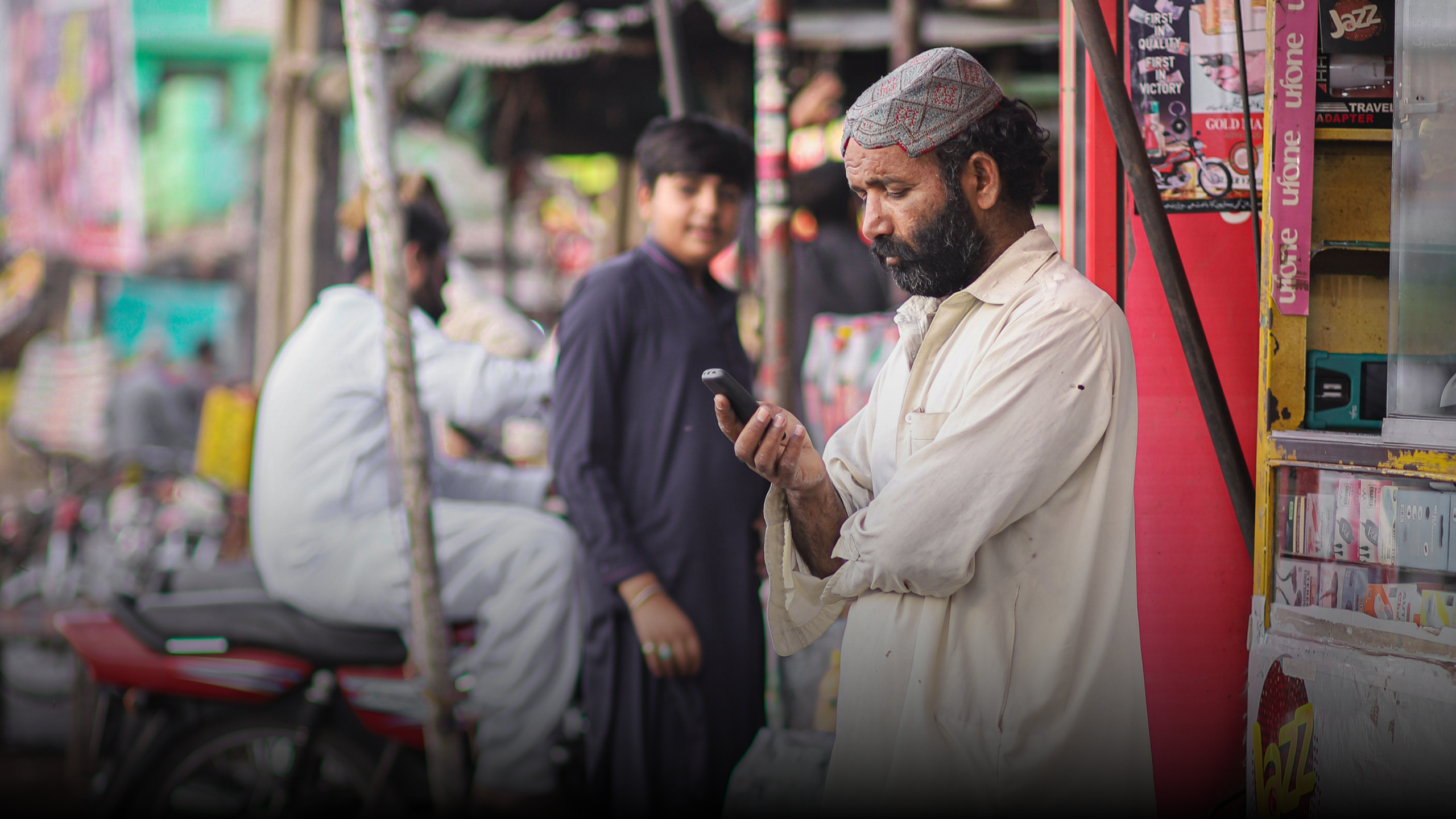
When governments speak about digital transformation, the conversation tends to begin with numbers. More broadband subscriptions, more digital payments, more services delivered online. Pakistan has its own encouraging figures. Broadband subscriptions rose from roughly 59 million in 2018 to 161 million by early 2026, pushing the country’s teledensity past 82 subscriptions for every 100 people. Most of that growth came from mobile internet plans. Yet the numbers conceal something more stubborn, which is that access and use are not the same thing. Ninety one percent of the country now sits under cellular coverage and still only about half the population goes online regularly. A resident of Karachi can stream a match on a smartphone without a second thought while someone in rural Baluchistan or parts of Khyber Pakhtunkhwa, is fortunate to hold a stable 3G signal at all.
Gender widens that divide further. Roughly four in five men in Pakistan own a mobile phone while ownership among women remains considerably lower and the gap grows wider still when the measure shifts from ownership to actual use of mobile internet. This distinction carries real weight. It shapes who has access to digital financial services, who can find employment through an app and who receives a public notice in time to act on it. Owning a smartphone or holding a digital identity does not, on its own, translate into trust. Many citizens possess both and still hesitate to use an online government service. A farmer may check the weather through an app each morning and remain excluded from the wider digital economy, largely because neither the tools nor the language on offer were designed with him in mind.
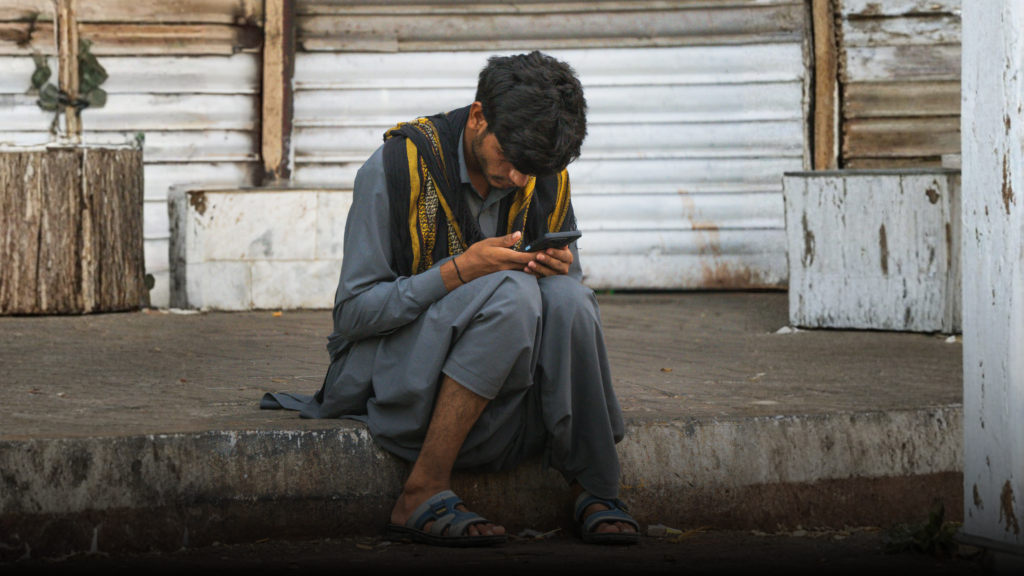
Pakistan’s connectivity has expanded faster than that of most countries in the region. Trust has not kept pace, and this gap shapes who actually participates in the country’s digital civic life, not merely who is technically online. This was a central theme of the Pakistan Digital Democracy Dialogue 2026, jointly convened by Accountability Lab and Freedom Gate Prosperity. Murtaza Solangi, Spokesperson to the President of Pakistan, chaired the session on Information Integrity, Digital Civic Space and Democratic Resilience. His argument was straightforward, though easily overlooked amid the rush to expand infrastructure. Expanding networks alone will not strengthen digital democracy unless citizens also have the skills and confidence to engage meaningfully with what has been built.
Dr. Yasar Ayaz, Chairman of NCAI, made a similar point in more direct terms. Unless Pakistan addresses persistent gaps in literacy and gender inclusion, he warned, digital transformation risks reinforcing inequality rather than reducing it. UNESCO data supports this concern, placing Pakistan’s adult literacy rate at around 59 percent, well below 76 percent for both India and Bangladesh in 2021. It is also worth examining the widely cited figure of 160 million broadband users more closely, since a considerable share of that total reflects corporate accounts and individuals holding more than one SIM. Once adjusted, the number of unique internet users in Pakistan is closer to 117 million, or about 45.7 percent of the population.
| Indicator | Pakistan | India | Bangladesh |
| Internet penetration (2025) | 45.7% | 55.3% | 44.5% |
| Number of cellular connections (2021) | 190 million | 1.12 billion | 185 million |
| Mobile connections as % of population (2025) | 75.2% | 76.6% | 106% |
| Adult literacy (2021) | 58.9% | 76.1% | 76.4% |
| Data protection law | Draft Personal Data Protection Bill 2023 (not enacted) | Digital Personal Data Protection Act 2023 (law) | Personal Data Protection Ordinance 2025 (gazetted) |
| Press Freedom Index (2026) | Rank 153/180 | Rank 157/180 | Rank 152/180 |
The country’s digital ambition is genuine and the connectivity figures reflect that. Ambition alone, however, does not secure public trust. Technology can modernize administration, improve service delivery and reduce costs, all of which carries real value. What it cannot do on its own is create legitimacy. That still depends on something older than any digital platform, namely whether citizens believe the systems handling their data and their lives are fair, transparent and accountable for their shortcomings.
Placing the regional figures side by side makes the lesson difficult to miss. Investment in infrastructure must be matched by investment in education, institutional capacity and regulation that genuinely protects rights. Without that balance, digital transformation does not level the playing field so much as widen the gaps already present. Sidra Jalil made this argument directly during the dialogue, noting that digital solutions must be designed around the realities of ordinary Pakistanis, in their own languages, with genuine attention paid to the barriers women face simply in getting online.
Trust matters most precisely when circumstances grow uncertain. When people cannot access timely, credible information, digital platforms cease to be neutral and become fertile ground for rumor and manipulation. Farhat Javed Rabani, a correspondent with BBC Eye Investigations, described reporting from the 2022 floods and from conflict affected areas, where fragile communication infrastructure left entire communities dependent on whatever circulated through social media. Misinformation spread there not because people were credulous but because reliable information arrived too slowly, or at times not at all.
This challenge is not unique to Pakistan. The Reuters Institute’s 2025 Digital News Report 2025 found persistently low levels of trust in news alongside a continuing shift toward social media, video platforms and online personalities. About 58 percent of respondents across 48 countries said they were not confident in their ability to distinguish true information from false information online. This leaves governments facing a genuinely difficult question, namely how to respond to such risks without undermining the very trust they are seeking to protect.
Pakistan’s own regulatory record illustrates how difficult that balance is to strike. The Prevention of Electronic Crimes Act (PECA) passed in 2016 and the amendments enacted in 2025, have sustained debate over how far the state should go in addressing online harm without narrowing space for free expression. Journalists, lawyers and civil society organisations have argued that certain provisions could discourage investigative reporting. Government officials, for their part, maintain that stronger legal tools are necessary to counter misinformation and cybercrime. Both positions carry some merit, which helps explain why the debate remains unresolved.
The more consequential question was never simply whether to regulate harmful online content. It is whether the manner of regulation builds public trust or erodes it. Digital democracy depends as much on citizens believing that regulatory institutions are legitimate as it does on those institutions actually curbing harm. The broader record in Pakistan complicates that case further. According to Access Now’s KeepItOn coalition, Pakistan experienced more than 20 internet shutdowns in 2024 alone, placing it among the countries most affected by government imposed disruptions worldwide. Such measures may address immediate security concerns. They also convey a clear message about the degree of transparency and accountability citizens can reasonably expect.
The dialogue also challenged a tendency common among governments, that of treating digital democracy and digitalisation as interchangeable. Raza Ali of PJN, speaking from a civil society perspective, reminded participants that democracy is ultimately about people rather than platforms. Digital transformation cannot be measured simply by counting how many services a government has moved online. It must be judged by whether citizens can participate safely, access public information and genuinely exercise their rights. He pointed to persistent gaps in publicly available governance data, unequal digital access and the continued absence of comprehensive personal data protection legislation as evidence that Pakistan’s digital transformation remains unfinished.
Such framing carries greater weight now than it did even a year or two ago. Artificial intelligence is no longer confined to research laboratories or private technology firms. It is steadily being integrated into public institutions, raising the stakes around questions of trust, accountability and democratic oversight. Citizens require confidence not only in the information reaching them but, in the algorithms, increasingly shaping decisions made on their behalf.
In many respects, artificial intelligence has become the next significant test of Pakistan’s digital governance. Properly deployed, it can strengthen public institutions through improved service delivery, greater administrative efficiency and decisions grounded in evidence. Deployed without adequate safeguards, transparency or public oversight, the same technology can just as easily deepen inequalities that already exist.
The National Accountability Bureau, in partnership with the National Centre of Artificial Intelligence, recently launched a domestically developed generative AI platform for corruption investigations, a clear indication that AI is moving from research settings into practical institutional use. NCAI’s Yasar Ayaz described it as Pakistan’s first sovereign generative AI investigation platform, arguing that locally developed systems afford the country greater control over its own data, language and institutional priorities than imported alternatives.
This momentum extends beyond government. Pakistan’s AI ecosystem now includes more than 200 AI-focused startups, with meaningful clusters forming in Lahore, Karachi and Islamabad. A growing number of Pakistani researchers and engineers trained abroad are contributing to this growth through research collaborations, new ventures and remote technical partnerships. At the policy level, Pakistan has approved its first National AI Policy, intended to build human capital, expand AI infrastructure and position artificial intelligence within national development planning. The more demanding task now lies in translating that policy into genuine institutional capacity.
The proceedings concluded with the endorsement of a Policy Action Matrix, functioning less as a single remedy than as a signal that discussion is giving way to coordinated action. Rather than prescribe one solution, the matrix identifies shared policy priorities and reinforces the principle that government, academia, civil society, the private sector and the media must work in a broadly common direction.
What matters most about the matrix is likely not its specific recommendations, but the recognition underlying the entire exercise, that no single institution can build a trustworthy digital future alone. Pakistan does not face a straightforward choice between embracing technology and protecting democratic values, and framing it that way oversimplifies the task. The more difficult work is building institutions capable of doing both simultaneously. That requires regulators who genuinely understand the technologies they oversee. It requires journalists committed to careful verification, researchers developing AI systems that reflect Pakistan’s own realities, and educators and civil society organisations engaged in the slower work of strengthening literacy and safeguarding accountability.
No participant left the Pakistan Digital Democracy Dialogue believing these challenges would be resolved quickly, nor did anyone suggest that technology is inherently democratic. What emerged instead was something more fundamental. Digital tools tend to amplify whatever they are built upon. Where governance is transparent, inclusive and accountable, digital innovation reinforces public trust. Where those foundations are weak, the same technologies can just as readily deepen existing inequality and public distrust.
Pakistan has reached a genuine turning point in its digital journey. What follows will not be measured by how many additional citizens come online. It will be measured by whether those citizens believe the digital state being built around them has earned their confidence. That, more than any measure of connectivity, remains the true test of digital democracy going forward.
About the Author:
Muhammad Abubakar is Program and Communications Manager at Accountability Lab Pakistan and can be reached at mabubakar@accountabilitylab.org