
NEWS
IN BRIEF

Islamabad was originally designed as a green, climate-resilient capital, with forests, open spaces, and natural corridors forming the core of its urban identity. Over time, rapid population growth, unplanned expansion, and infrastructure projects have significantly reduced tree cover and green land, weakening the city’s natural climate buffers. The blog highlights how recent large-scale tree cutting, particularly in areas like Shakarparian, has sparked public and scientific concern over environmental governance, transparency, and long-term ecological impact. It emphasizes that protecting urban forests is essential for managing heat, flooding, air quality, and public health, and calls for science-based policies, accountability, and citizen engagement to safeguard Islamabad’s environmental future.
SHARE
Islamabad, Pakistan’s capital, was once celebrated as the “Green Capital”, a city where lush forests, rolling hills, and serene green spaces harmonized with urban life. Conceived in the early 1960s as a planned city to serve as the nation’s administrative hub, Islamabad was envisioned not only as the seat of government but also as a model of sustainable urban living. Nestled at the foothills of the Margalla Hills, adjacent to the Rawal Dam, and surrounded by expansive green belts, the city initially offered residents a rare combination of natural beauty and modern infrastructure.
The city’s master plan, designed by Greek architect Constantinos Apostolou Doxiadis, wove together wide avenues, zoned residential sectors, and significant green corridors. Preservation of natural landscapes, including forests, grasslands, and open spaces, was integral to this vision, distinguishing Islamabad from other South Asian capitals. Greenery was not a luxury but a foundation of the city’s identity and climate resilience.
I personally migrated to Islamabad in the early 2000s from a small region in central Punjab, where rainfall patterns were erratic and environmental planning minimal. The city’s climate immediately struck me: regular rains from early January to late February, and again from July to August, kept Islamabad lush and temperate. The greenery was not merely aesthetic; it created a microclimate, moderated temperatures, and nurtured biodiversity, making Islamabad a truly unique urban ecosystem.
The gradual erosion of a green legacy
However, as Islamabad’s population swelled, from just over 0.1 million in the early 1960s to an estimated 2.4 million by 2023, its natural environment began to deteriorate. Urban expansion, informal settlements, and infrastructure projects encroached on forests and open spaces, straining the city’s ecological balance.
Rapid development has reshaped land use across the city. Between 2020 and 2022, tree‑covered land in Islamabad declined significantly, dropping by approximately 1,622 hectares, a 12% loss in just two years. The urban footprint expanded at the expense of natural land cover that had once buffered temperature extremes, supported groundwater recharge, and sustained biodiversity.
A separate long‑term study spanning from 1990 to 2020 also showed dramatic urban expansion, built‑up area grew nearly sixfold, transforming rich agricultural and green lands into urban sectors, roads, and housing estates.
Policy choices and ecological consequences
The Capital Development Authority (CDA), the body responsible for Islamabad’s planning and development, frequently framed its decisions around economic growth, infrastructure, and convenience. But critics argue that environmental concerns have been treated as secondary or cosmetic.
Large infrastructure projects, from road widenings and flyovers to housing societies, have historically lacked robust environmental impact assessments. Some new developments even extend into previously protected green zones or marginal forest patches, undermining ecological resilience.
Environmental experts also warn that the loss of natural land cover amplifies climate risks. Replacing permeable soil with impermeable roads and buildings reduces groundwater recharge and increases surface runoff, contributing to urban flooding during heavy rainfall. The absence of sufficient vegetation further drives up urban heat island effects, leading to hotter summers and more extreme weather episodes.
A turning point and public outcry
In 2025, Islamabad witnessed a stark illustration of this imbalance. While the city grappled with water scarcity and shifting rainfall patterns, an unprecedented hailstorm hit several sectors, causing widespread damage to vehicles and property, a disaster many environmentalists linked to the weakening of the city’s natural climate buffers.
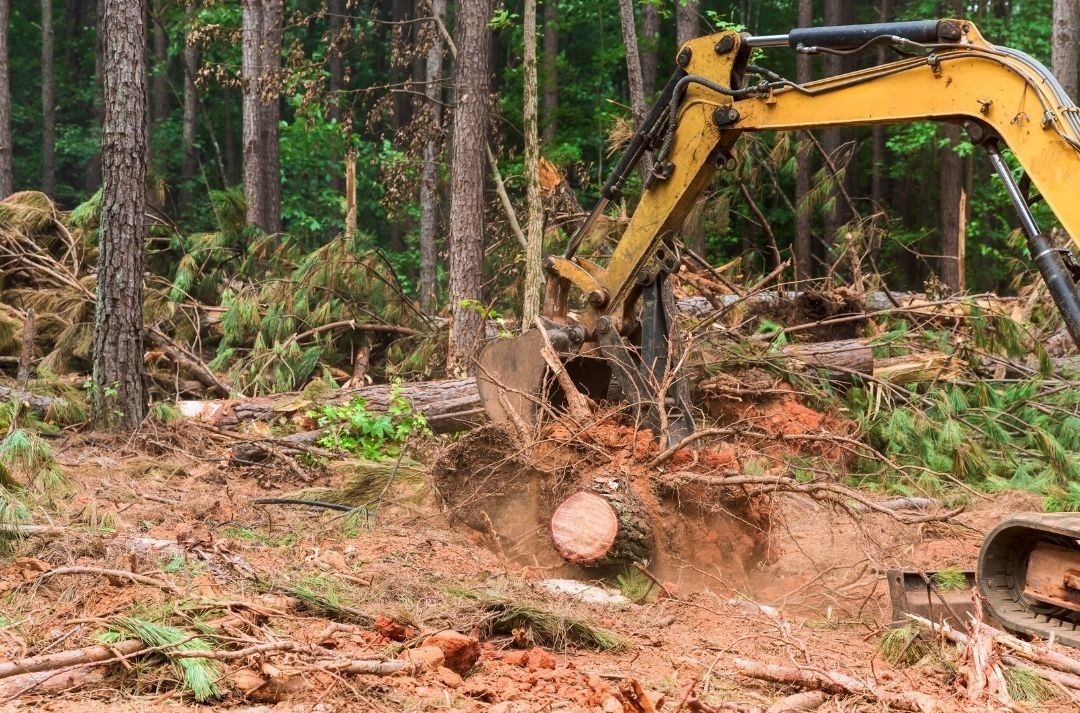
The most controversial development in recent months has been the large‑scale cutting of trees, especially in and around the Shakarparian forest. What officials describe as a targeted campaign against “allergy‑causing” paper mulberry trees has led to the removal of over 29,000 trees, including some mature specimens believed to be decades old.
Official statements assert that this activity aims to address respiratory health issues, particularly pollen allergies and asthma, by reducing the concentration of paper mulberry (an invasive, high‑pollen species) in areas such as Shakarparian, F‑9 Park, and major sectors including H‑8 and H‑9. Authorities have promised to replace every cut tree with three new native, fruit‑bearing, or pine trees and have already planted tens of thousands of saplings.
Prime Minister Shahbaz Sharif personally took notice of the uproar and ordered a report on the matter, emphasizing environmental protection and compliance with regulations, while the Federal Minister for Climate Change, Dr. Musadiq Malik, defended the policy as a measured approach to public health and ecological balance.
The Pakistan Environmental Protection Agency (EPA) has also launched investigations into recent tree felling in areas where concerns were raised by residents, seeking details on mitigation plans and species replacement strategies.
Public and scientific pushback
Despite official reassurances, widespread criticism persists. Environmentalists and civic groups argue that the tree removal effort is being executed without adequate ecological strategy, transparency, or monitoring. A report cited by WWF‑Pakistan highlights concerns that vegetative loss in Islamabad extends beyond paper mulberry management and includes broader habitat destruction linked to infrastructure projects and poor planning.
Critics stress that uprooting mature trees, which take decades to grow, and relying on sapling‑replacement promises does little to offset the immediate loss of carbon repossession, shade, soil stability, and urban cooling provided by older tree stands. Many scientists also note that the health impact of paper mulberry pollen has not been conclusively quantified in local studies, calling for more research before undertaking such sweeping arboreal interventions.
Public sentiment reflects this skepticism. Social media and civic platforms are filled with citizen accounts of forest areas transformed into bare land, concerns over non‑native species being misclassified, and fears of accelerating habitat loss. Many residents argue for scientific assessments, phased replanning, and community engagement rather than unilateral tree felling.
Shakarparian: heart of the controversy
The Shakarparian forest in particular has emerged as a focal point of the debate. Often referred to as Islamabad’s “green lung,” this forested ridge once offered cooling breezes, biodiversity corridors, and scenic relief from urban life. Conservation advocates warn that continued fragmentation and clearance threaten soil stability, local water tables, and wildlife habitat.
Satellite imagery and longitudinal studies show that, over decades, Shakarparian and similar urban forest patches have already shrunk significantly due to development pressures. This degradation is compounded when environmental regulations, such as the ICT Zoning Regulations intended to safeguard forest land, are interpreted loosely or violated under development exemptions.
Climate, health, and policy imperatives
Islamabad’s ongoing environmental challenges are interwoven with broader climate vulnerability concerns. As urbanization intensifies heat stress, air pollution, and water scarcity, the capital’s capacity to adapt hinges on preserving and expanding green infrastructure. Trees are not just aesthetic, they are core infrastructure for climate resilience, providing shade, reducing heat islands, absorbing pollutants, and enhancing water infiltration.
Globally, cities facing rapid growth confront similar dilemmas: balancing housing, transport, and economic expansion with ecological stability. Successful models emphasize green belts, urban forests, permeable infrastructure, and robust environmental impact frameworks, elements Islamabad’s planners now urgently need to prioritize.
At the national level, the federal government launched an ambitious 2025 tree plantation campaign with a target of over 41 million saplings across Pakistan, highlighting the importance of greening initiatives amid climate change challenges.
A future at a crossroads
Islamabad today stands at a crossroads. Without urgent reform, including stringent environmental oversight, transparent planning, and genuine citizen engagement, the city risks being remembered not as the “Green Capital” but as yet another concrete‑dominated metropolis where natural heritage survives only in nostalgia.
The broader lesson extends beyond Islamabad: balancing urban growth with ecological preservation is not optional, it is essential. Trees, forests, wetlands, and green spaces are vital for human health, climate stability, and overall urban livability. Protecting and restoring them requires political will, scientific rigor, and a commitment to sustainable development that respects both people and the planet.
Only by acting decisively now can Islamabad hope to reclaim its legacy as a city where natural beauty, biodiversity, and modern life harmoniously coexist, a capital truly worthy of its name.
About the Author
Abdul Aleem Ch is programs officer at Accountability Lab Pakistan, and can be reached out at aleem@accountabilitylab.org