
NEWS
IN BRIEF

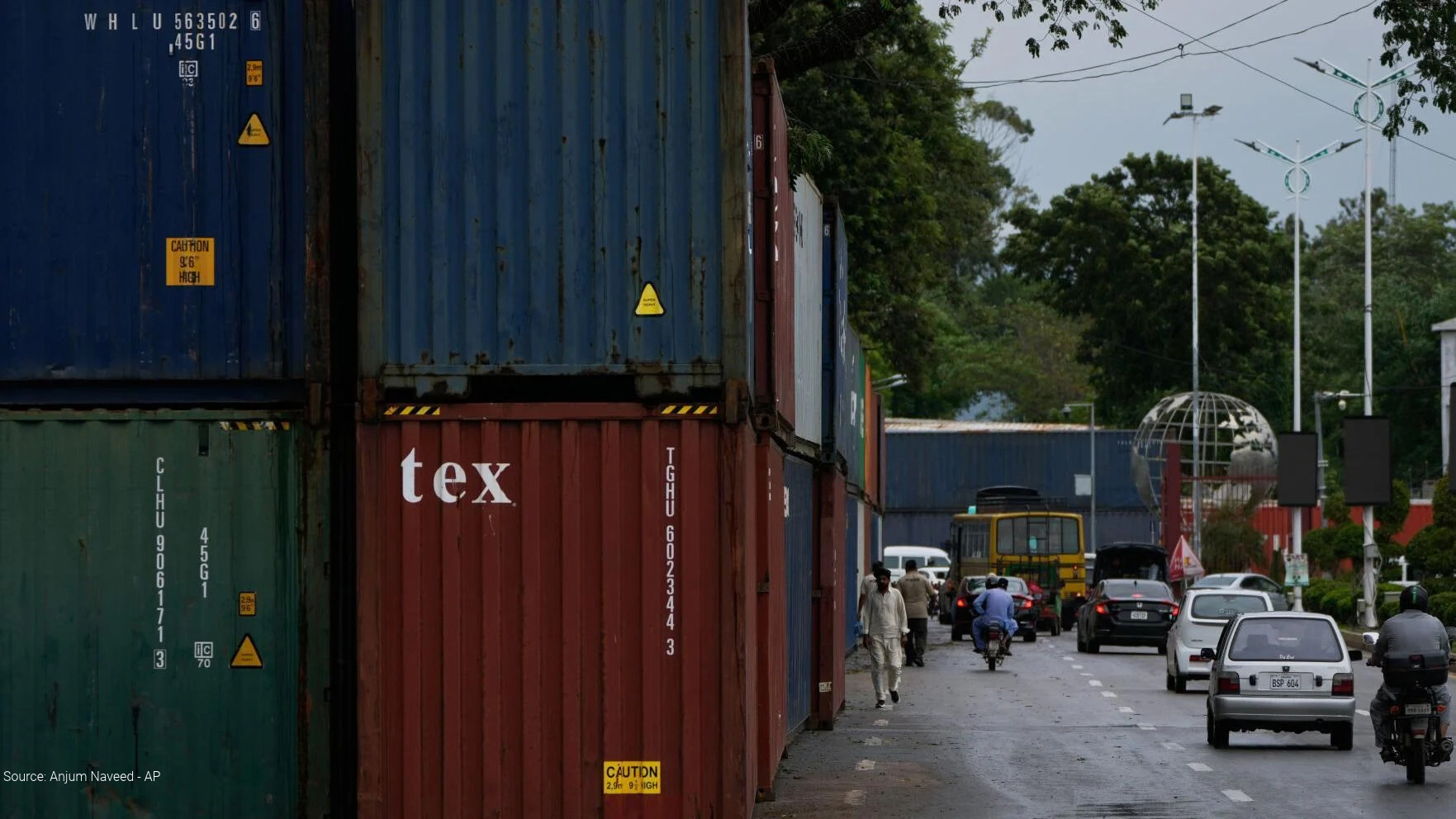
In Islamabad, a protest can bring an entire city to a standstill before a single person takes to the street. Containers, closures and suspended services have become familiar parts of the state’s response to public dissent. The cost is carried by ordinary citizens whose daily lives are disrupted alongside the protesters. A democracy needs space for disagreement, and that space is built through dialogue, restraint and trust.
SHARE
Being a resident of the Islamabad for the past 6 years, I have experienced what happens to the city when a protest is announced. Roads are blocked by containers, schools, colleges and universities are shut down, and businesses are halted. That is what the state response is to a protest. And this has become a pattern.
In the month of September 2026, three protests and long marches were announced towards Islamabad by three different sectors of the society which included Jamat-e-Islami long march against petroleum levy, Kisaan Ittehad march and the Pakistan Tehreek-i-Insaaf protest, all scheduled for the last two weeks of September, but before even these marches began the Government of Pakistan, and Islamabad city’s administration imposed Section 144, containers were delivered to almost every major intersection. By one report, over a thousand containers were placed across the city. The federal government approved the deployment of Rangers in Islamabad and several Punjab districts from 20 September to 5 October, and the Punjab government asked for mobile and internet services to be downgraded around Rawalpindi and Attock.
The pattern reaches across very different communities. During the PTI march of November 2024, Amnesty documented severe restrictions on assembly, movement and mobile services, and arbitrary detentions of thousands of protesters . In December 2023, Baloch families marching to Islamabad against enforced disappearances were met with water cannons, tear gas and batons, and their leader. On March 8th, 2026, marking International Women’s Day, more than 60 women were arrested and detained by the police due to their participation in a peaceful demonstration that was about to take place on the streets of Islamabad, Pakistan’s capital. The Aurat March participants gathered in Islamabad but were arrested 30 minutes before the protest even began.
Although Article 16 of the Constitution guarantees every citizen the right to assemble peacefully and without arms, subject to reasonable restrictions imposed by law in the interest of public order. In practice, the exception has begun to outweigh the right. Since September 2024, the Peaceful Assembly and Public Order Act has required assemblies in Islamabad to be registered a week in advance, with up to three years in prison for attending an unsanctioned one. It moved through the legislature within days, and Amnesty International warned that it set a precedent other provinces could follow.
Political sociology helps explain why this matters. Charles Tilly described protest as part of a society’s “repertoire of contention“, the set of means people know they can use to oppose a public decision they consider unjust . He also argued that the ways people protest vary sharply from one political regime to the next . When courts are slow and institutions feel unreachable, the streets are often the only channel left for the citizens to voice their grievances. Therefore closing down the city doesn’t solve the problems that the citizens are protesting about rather it makes them worse.
Donatella della Porta, a scholar of protest policing, distinguishes between “escalated force” and “negotiated management”. The first meets protest with preemptive force. The second relies on dialogue and tolerates some disruption. The research she helped shape suggests that repressive policing is often counterproductive, can escalate tension, and can become the focus of a new cycle of demonstrations.
This is why the damage to public property is so troubling, and so avoidable. It is real, and it should never be excused. But people who are blocked, contained and tear-gassed before they speak may be more likely to answer in kind.
There is another way. Designated, accessible spaces for assembly could serve both citizens and the state. Pakistan has precedent: in 2022 the Supreme Court directed the Islamabad chief commissioner to provide an alternate site for PTI’s march. The government later alleged that assurances given to the Court were broken when marchers headed for D-Chowk. A designated space works only where both sides keep their word, and only if it is central enough to be heard.
In October 2024, Pakistan’s record was reviewed by the UN Human Rights Committee, which raised concerns including restrictions on freedom of movement, while Amnesty pointed to the crackdown on protests and the new assembly law as part of the context . When a state shuts down its capital city to avoid a protest by its own citizen, it often feels insecure.
So what would a better approach look like? It would begin by treating an announcement as the start of a conversation rather than an emergency. Authorities could agree on a route and a venue in advance, keep force proportionate and a last resort, and leave mobile networks on. Organisers, in turn, would honour what they promise: peaceful conduct, the agreed boundaries, and care for public property. Neither side can build trust alone, but someone has to move first, and the state holds the greater power.
The citizens holds right to peacefully protest and convey their grievances to the people in power. That right should not be taken away. Because at the end of the day it is the public that suffers when containers are placed all over the city with no way to travel to hospitals, airport or educational institutes. As I write, PTI’s march is scheduled for 4 October. Whatever unfolds that day, the question will outlast it: whether we meet our citizens with blockades or with dialogue. A confident democracy chooses dialogue.
About the Author:
Momal Nawab is Program Officer Officer at Accountability Lab Pakistan and can be reached at momal@accountabilitylab.org