
NEWS
IN BRIEF

Pakistan’s legal framework is not the only problem facing survivors of sexual violence. The greater failure lies in the distance between what the law promises and what survivors encounter in practice. Reporting can expose women to family pressure, social stigma and intimidation. Even after a complaint is filed, poor evidence collection, delayed investigations and limited institutional capacity can leave cases stalled or weakened. As a result, protections that exist on paper often remain out of reach for those who need them most.
SHARE
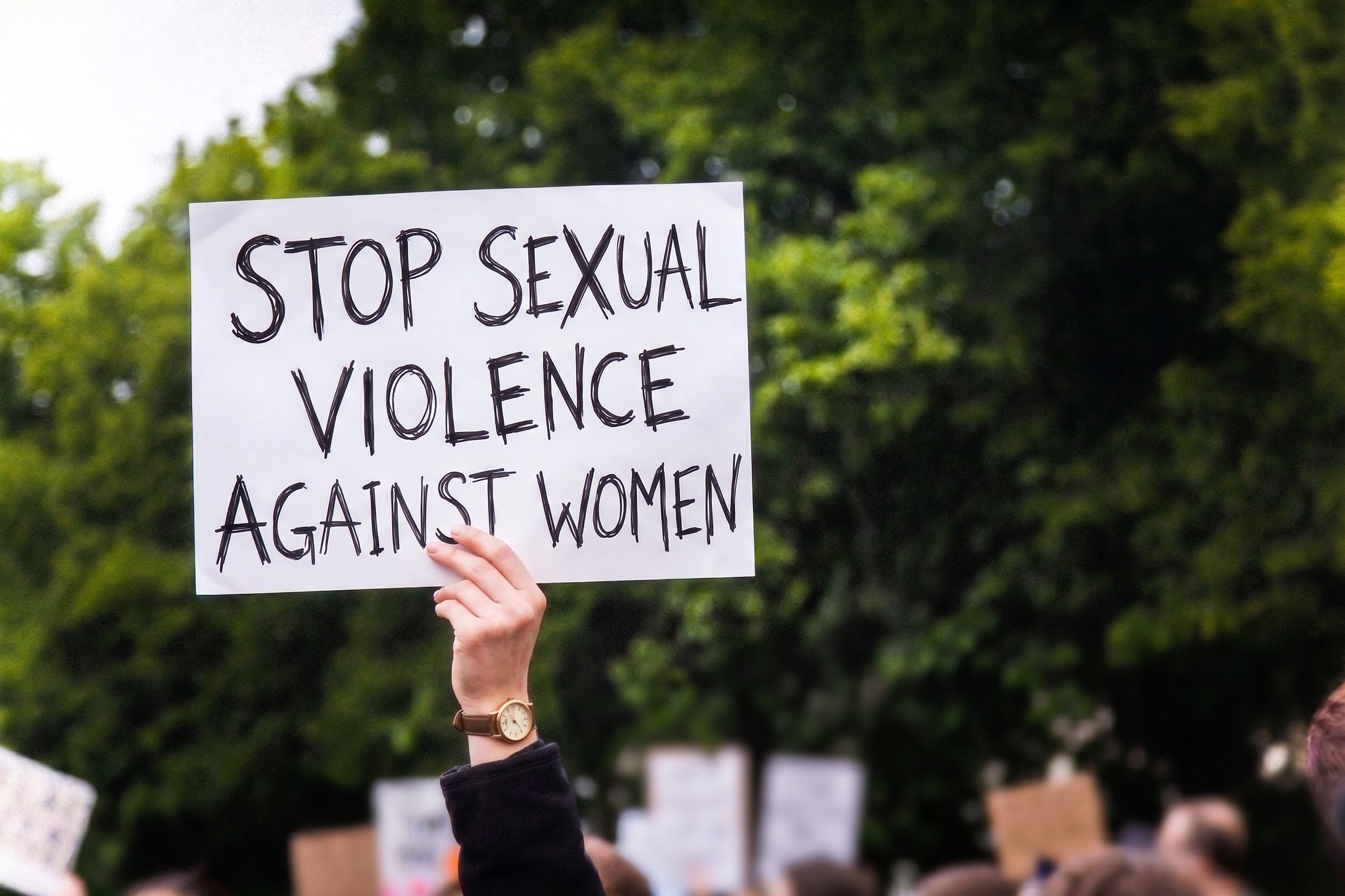
When a woman in Pakistan speaks about sexual violence, the conversation often turns to her instead of what was done to her. Why was she there? Why did she trust him? Why did she go with him? Why did she not fight back? Even her clothes, relationships and decision to report the assault can become subjects of scrutiny. Before the man accused of violence is held accountable, the woman is often made to explain and defend herself.
This judgement can have consequences long before a case reaches court. It can make women afraid to report, leave families unsure of how to respond, and make survivors question whether anyone will believe them. The 2020 Lahore-Sialkot Motorway rape case showed the difference that public and institutional attention can make. A woman whose car had broken down was assaulted in front of her children, sparking nationwide outrage and demands for accountability. The case eventually resulted in convictions.
But most survivors do not have an entire country watching. According to UNFPA Pakistan, 56% of women who experience physical or sexual violence do not seek help or tell anyone. Behind every unreported case is a story that may never reach the police, the courts, or the public. And for many women, the fear of what will happen after they speak can be almost as powerful as the fear that kept them silent in the first place. The cases recorded by the police therefore represent only the violence that has crossed the barrier of silence. And that raises the first question: why do so many women remain silent?
The cases we see are already alarming
The available police data show how serious the problem is, even before accounting for the violence that never gets reported. The Sustainable Social Development Organisation (SSDO), recorded 5,339 reported rape cases across Pakistan in 2024. Of these, Punjab accounted for 4,641 cases, Khyber Pakhtunkhwa 258, Sindh 243, Islamabad 176 and Balochistan 21. In 2023, Punjab alone recorded 6,624 reported cases.
These figures cannot tell us whether rape itself is increasing, since reporting is shaped by awareness, police registration and access to justice. What they do show is that thousands of cases are entering the formal justice system. The more difficult question is what happens once they do. According to data, Punjab’s conviction rate stood at merely 0.4 percent. Sindh recorded no convictions out of 243 cases, Balochistan none out of 21, Islamabad only seven out of 176, and Khyber Pakhtunkhwa just one out of 258.
These numbers do not mean that every allegation should result in a conviction; guilt must be proved beyond reasonable doubt, and every accused person is entitled to a fair trial. But such a wide gap between reported cases and convictions demands attention. The problem is therefore not only how much sexual violence is taking place, but how many cases make it from reporting to accountability.
From silence to the police station
For many survivors, reporting a rape means risking much more than a criminal case. One Study found that 77% of perpetrators were family members or acquaintances of survivors. When the accused is a family member, relative or acquaintance, reporting can threaten relationships, housing, income and social standing especially when a woman depends on that same family or community for support. The pressure of family “honour” often makes the decision even harder. Women may be pressured to withdraw complaints, reconcile with the accused or remain silent. Even when women do report, protection is not guaranteed. In December 2025, a 16-year-old girl in Sahiwal accused her own father and elder brother of repeatedly raping her. She told police she feared being killed in the name of honour if she spoke out. In another case from Kasur the same year, DNA evidence later revealed that a teenage survivor’s baby had been fathered by her paternal uncle, after she had initially named a different man. These cases show how deeply complicated and dangerous reporting becomes when the perpetrator is already inside the home or the family.
Silence, in such situations, is not always a choice. It is often the only option a survivor believes she has left.
Pakistan has laws. The problem is making them work.
Pakistan’s legal framework provides significant protections against sexual violence. The Constitution protects the security and dignity of individuals and guarantees equality before the law, while Sections 375 and 376 of the Pakistan Penal Code define and punish rape. The Anti-Rape (Investigation and Trial) Act, 2021 introduced Anti-Rape Crisis Cells, specialised investigation procedures and safeguards for survivors, including prohibiting the two-finger test and limiting the use of a survivor’s previous sexual history.
But the infrastructure needed to make these protections meaningful remains incomplete. By September 2025, only 40 of 111 notified Anti-Rape Crisis Cells were reportedly operational, which reveals that merely 36% of the country’s notified cells are currently serving survivors. The referral system is another weakness. According to the cited assessments, of more than 9,000 Schedule-II sexual offences registered, only around 17 percent of FIRs were referred to Anti-Rape Crisis Cells.
These gaps matter because the strength of a case is often determined long before it reaches a courtroom. Delayed medical examinations, weak investigations, missing forensic evidence, pressured witnesses, and prolonged proceedings can leave prosecutors trying to prove a case with evidence already weakened by earlier failures.
When that happens, the court may ultimately be left with reasonable doubt. Protecting the accused from conviction without sufficient proof is a fundamental principle of criminal justice. The concern arises when avoidable institutional failures create the evidentiary weaknesses on which an acquittal later rests.
What does a “credible” survivor look like?
The justice system also has to contend with another problem: assumptions about how a woman should behave after rape. There is often an expectation that a genuine survivor will immediately report the assault, physically resist, scream or show visible injuries. Trauma does not always follow that pattern. A woman may freeze, remain silent because of threats, fear further violence or delay reporting because she is afraid of her family or community.
Pakistani courts have considered these realities alongside the strict evidentiary requirements of criminal law. In an Islamabad High Court judgment authored by Justice Babar Sattar, the court considered delayed reporting and the absence of physical resistance, recognising that submission in circumstances of fear or coercion cannot simply be treated as consent.
At the same time, Hassan Khan v. The State (2025 SCP 461) demonstrates why evidence must still be examined in its entirety. The accused had been charged with rape at gunpoint, and DNA evidence established his biological paternity after the woman later gave birth. The Supreme Court nevertheless set aside the rape conviction after considering the wider evidentiary circumstances, including delayed reporting and the absence of physical injuries. The judgment illustrates an important distinction: an allegation may be understood in the context of trauma and fear, while a criminal charge can still fail if the prosecution cannot establish guilt beyond reasonable doubt.
This is the quiet trap many survivors fall into. The very conditions that make them afraid to speak fear, family pressure and trauma can later make their cases harder to prove. Delay caused by fear often means critical evidence is lost. When that happens, the benefit of doubt shifts, almost inevitably, toward the accused.
The result is not always that the court refuses to believe the woman. Instead, the system, through its earlier failures, has already made belief harder to sustain in a court of law.
When everyone is watching
The Lahore-Sialkot Motorway rape case offers a striking contrast. This case received sustained national attention, with investigations closely followed and institutions facing intense public scrutiny and resulted in a conviction.
Public attention was not the only factor behind those outcomes; evidence, investigation, prosecution and judicial findings remained decisive. But scrutiny can change the environment in which institutions operate. When journalists are following a case, lawyers are monitoring proceedings and the public is demanding answers, delays and failures become harder to overlook. Most survivors do not have that visibility. Their FIR may remain one among hundreds, a delayed forensic report may attract no attention and a postponed hearing may pass without anyone outside the family knowing.
The real test of accountability
Pakistan has criminal laws against rape, specialised legislation and procedures intended to protect survivors. The country has also shown, through high-profile cases, that convictions are possible. The persistent problem is the distance between those protections on paper and the experience of an ordinary survivor.
A woman may first have to overcome pressure from her family to remain silent. If she reports, she may encounter an under-resourced system. Evidence may be delayed, investigations may be incomplete and proceedings may take years. By the time the case reaches court, the prosecution may be trying to prove what happened with evidence weakened by failures much earlier in the process.
This is why accountability cannot be measured simply by the severity of punishment. A harsh sentence means little if a case never reaches a conviction because the system failed before the trial even began. The woman whose case becomes national news should not have a fundamentally different chance of justice from the woman whose complaint remains in an ordinary police file.
“She has already suffered enough. She should not have to suffer the failure of justice too”
About the Author:
Almas Jamil is Communications and Advocacy Officer at Accountability Lab Pakistan and can be reached at almas@accountabilitylab.org