
NEWS
IN BRIEF

Child malnutrition in Pakistan extends beyond food scarcity, driven by poverty, inadequate healthcare, poor sanitation, and weak implementation of nutrition policies. Millions of children suffer from hidden hunger, where diets lack the essential nutrients needed for healthy growth and development despite providing enough calories. While initiatives such as the Benazir Nashonuma Programme demonstrate that integrated nutrition and social protection interventions can improve outcomes, sustained progress depends on stronger governance, accountability, and equitable access to health and nutrition services.
SHARE
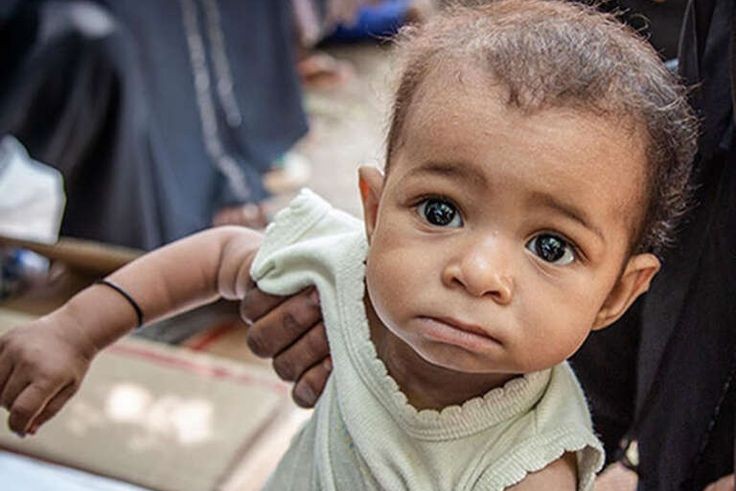
When her infant son, Younas, failed to gain weight and became increasingly unwell, Haseena Fiyyaz knew she needed medical help. Like many mothers, she believed she was providing the best care she could by breastfeeding him and supplementing his diet with buffalo’s milk. Yet his condition continued to worsen. At a Basic Health Unit in Muzaffargarh, Punjab, health workers discovered that Younas was suffering from severe acute malnutrition, a condition caused by a critical lack of nutrients required for healthy growth and development. Following appropriate treatment and continued nutritional support, he regained his health. While Younas recovered, many children across Pakistan continue to face similar challenges, often without timely diagnosis or access to care.
Younas’s story highlights a reality that is frequently overlooked. Malnutrition is not always the result of too little food. A child may consume enough to satisfy hunger but still lack the essential vitamins, minerals, proteins, and other nutrients needed for healthy physical growth, brain development, and a strong immune system. This often-invisible form of malnutrition, known as hidden hunger, affects millions of children and can have lifelong consequences if left unaddressed.
The National Nutrition Survey (NNS) Pakistan 2018 showed that 40.2% of children less than five years of age were stunted, 17.7% wasted (the highest ever recorded in the country and above the WHO’s 15% emergency threshold), and 28.9% underweight. More than half of children aged 6–59 months and 42.6% of women of reproductive age were anemic. Iron deficiency was estimated in 46.9% of pregnant women and vitamin D deficiency in 81.2%. These are not abstract indicators; they describe the day-to-day reality of children whose ability to grow, learn and survive is being quietly eroded.
There is no single cause of malnutrition in Pakistan. It is shaped by the interaction of poverty, food insecurity, inadequate healthcare, poor sanitation, maternal health, education, and the effectiveness of public institutions. Understanding these interconnected factors is essential because improving child nutrition is not simply about increasing food availability; it is about ensuring that families have access to the services, resources, and opportunities that enable children to grow and thrive. This explores childhood nutritional deficiencies through biological, socio-economic, and governance lenses, arguing that lasting progress depends on strengthening all three together.
The impact of early life deficiencies on lifelong health
Nutritional requirements change throughout childhood, and deficiencies at each stage have different, often permanent consequences.
Infancy: The First 1,000 Days Matter Most
Nutrition begins long before a child learns to walk. According to UNICEF, the first 1,000 days from conception until a child’s second birthday represent the most critical period for physical growth and brain development. During this stage, breast milk provides the nutrients and protective antibodies an infant needs, particularly during the first six months of life.
However, many children in Pakistan begin life at a nutritional disadvantage. Maternal undernutrition, inconsistent breastfeeding practices, and limited access to quality postnatal care increase the likelihood of poor health outcomes from birth. After six months, breast milk alone is no longer sufficient and children require diverse complementary foods. When these foods are unavailable or unaffordable, deficiencies in iron, zinc, and vitamin A can develop early, weakening immunity and increasing vulnerability to infection during the most important period of growth.
Early Childhood: When Hidden Hunger Takes Hold
A child may eat enough food every day and still suffer from malnutrition. This is the reality of hidden hunger, a condition where diets provide sufficient calories but lack the essential vitamins and minerals needed for healthy development.
According to the National Nutrition Survey (2018), more than half of Pakistani children aged 6–59 months are anemic. Iron deficiency contributes to fatigue, poor concentration, reduced immunity, and lower learning capacity. Deficiencies in vitamin A, zinc, iodine, and vitamin D further affect children’s physical growth, disease resistance, and cognitive development. Vitamin D deficiency alone affected more than 60% of surveyed children, raising concerns about bone health during one of the fastest periods of growth.
Adolescence: New Challenges, New Nutritional Needs
Adolescence marks another period of rapid physical growth, increasing the body’s demand for protein, iron, calcium, and other essential nutrients. Adolescent girls are particularly vulnerable to iron deficiency because of menstruation, making anemia a significant concern that can affect energy levels, school attendance, academic performance, and future maternal health.
At the same time, Pakistan is experiencing a nutritional transition. While many children continue to suffer from undernutrition, increasing consumption of processed foods and sugar-sweetened beverages has contributed to rising rates of overweight and obesity, particularly in urban areas. This “double burden of malnutrition” highlights a changing food environment where undernutrition and overnutrition now coexist within the same communities and sometimes even within the same household.
The Socio-Economic Impetus Behind the Figures
Food insecurity & poverty. For low-income families, the choice of food is determined not by nutrition but by cost. Heavy reliance on staples, with little access to fruit, vegetables, dairy or protein, is a direct route to micronutrient deficiency, and rising food prices have narrowed this margin further. As the Food and Agriculture Organization (FAO) notes, food security is not simply about producing enough food. Nutritious food may be available in markets, but if families cannot afford to buy it, children remain vulnerable to nutritional deficiencies. Availability without affordability does little to improve child nutrition.
Education and awareness: Caregiver knowledge of breastfeeding, complementary feeding and hygiene improves child outcomes measurably. But awareness without means does little to change the situation: a mother who is aware of the importance of dietary diversity cannot act on that awareness if her household cannot afford diverse food. Nutrition programs that consider “awareness” as the end goal, rather than the beginning, often fall short.
Water, sanitation and hygiene: Diarrheal disease and nutrition are trapped in a feedback loop: repeated infection impairs nutrient absorption, and malnutrition weakens the immune response to infection. In this sense, investment in WASH is an investment in nutrition, although rarely reflected in nutrition budgets.
Nutrition as a Governance Issue: Access to nutritious food, healthcare and support services for children depends heavily on how well institutions design, fund and monitor the relevant programs. “Malnutrition is caused by the interaction of food systems, health systems, social protection and environmental conditions,” the WHO says, another way of saying that no single ministry can fix it alone.
Policy is there, delivery is patchy: There is no shortage of nutrition initiatives in Pakistan: micronutrient supplementation, food fortification, breastfeeding promotion, community nutrition services. NNS 2018, with support from UNICEF, was designed to refine targeting for exactly those programs. The persistent gap is less a policy design issue than an implementation challenge: reaching remote and underserved districts, maintaining supply chains for fortified foods and supplements, and maintaining the capacity of frontline health workers. After the 18th Amendment, health was devolved to the provinces, which has also meant that nutrition financing, data systems, and program quality vary significantly by province, a coordination challenge that is more evident in outcome data than in policy documents.
The Benazir Nashonuma Program provides social safety, which targets children under two and pregnant and nursing women. The same 1,000-day window found to be most crucial is the best illustration of tying financial assistance to nutrition results. Through 578 facilitation centers and 169 stabilization centers, it had reached over 4.5 million women and children in 157 districts as of 2026. In addition to a 6% decrease in low-birth-weight cases and an 11% decrease in premature deliveries, an Aga Khan University impact review revealed that stunting among beneficiary children was 22% lower at six months and 18% lower at one year of age compared to non-beneficiaries. These findings demonstrate the potential of integrating social protection with nutrition services to improve maternal and child health outcomes. They also highlight the importance of sustained investment, effective monitoring, and continuous evaluation to ensure that successful interventions can be expanded without compromising service quality.
Accountability: None of this can happen without institutions that are accountable for results, transparent allocation of resources, real monitoring, and functioning grievance channels when services do not reach the people they are meant for. BISP’s own push for an integrated grievance management system is a step in that direction, but its effectiveness at the provincial and district level is not yet well documented in public evaluations. Community engagement, where families are partners rather than recipients, tends to reveal local delivery failures earlier than top-down monitoring, but only where feedback channels are acted on rather than being symbolic.
Progress depends on continued coordination between government institutions, health providers, civil society and development partners building up maternal nutrition and breastfeeding support, broadening dietary diversity and identifying nutritional risk early, not when it has already become acute malnutrition.
It also means seeing affordability as a nutrition variable, not a side issue. Food systems policies that increase calorie availability without improving the affordability of diverse, nutrient-dense food will keep hidden hunger in place, even as headline hunger numbers improve. Programs like Nashonuma demonstrate what is possible when social protection and nutrition are designed in tandem, not separately. The challenge now is less about designing new interventions and more about funding, staffing, and monitoring the ones that already have evidence behind them and being honest about where implementation, not policy, is the bottleneck.
Conclusion
Child nutritional deficiencies in Pakistan are not simply the result of inadequate diets; they reflect broader inequalities in access to healthcare, education, clean water, social protection, and effective public services. While the statistics remain alarming, they also demonstrate that these challenges are preventable when evidence-based interventions are implemented consistently and reach the communities that need them most.
Pakistan already has many of the tools required to improve child nutrition. Programs such as the Benazir Nashonuma Programme have shown that combining financial support with nutrition and healthcare services can produce measurable improvements in child health. The challenge is no longer identifying solutions; it is ensuring that proven interventions are adequately funded, effectively implemented, and continuously monitored.
Ending child malnutrition will require more than food assistance alone. It demands accountable institutions, coordinated public policies, resilient food systems, and meaningful citizen participation. Every child deserves not only the opportunity to survive, but also to grow, learn, and reach their full potential. Building that future is a shared responsibility and one that requires sustained commitment from government, civil society, development partners, and communities alike.
About the Author:
Abeeha Rana is Project Associate at Accountability Lab Pakistan and can be reached at abeeha@accountabilitylab.org